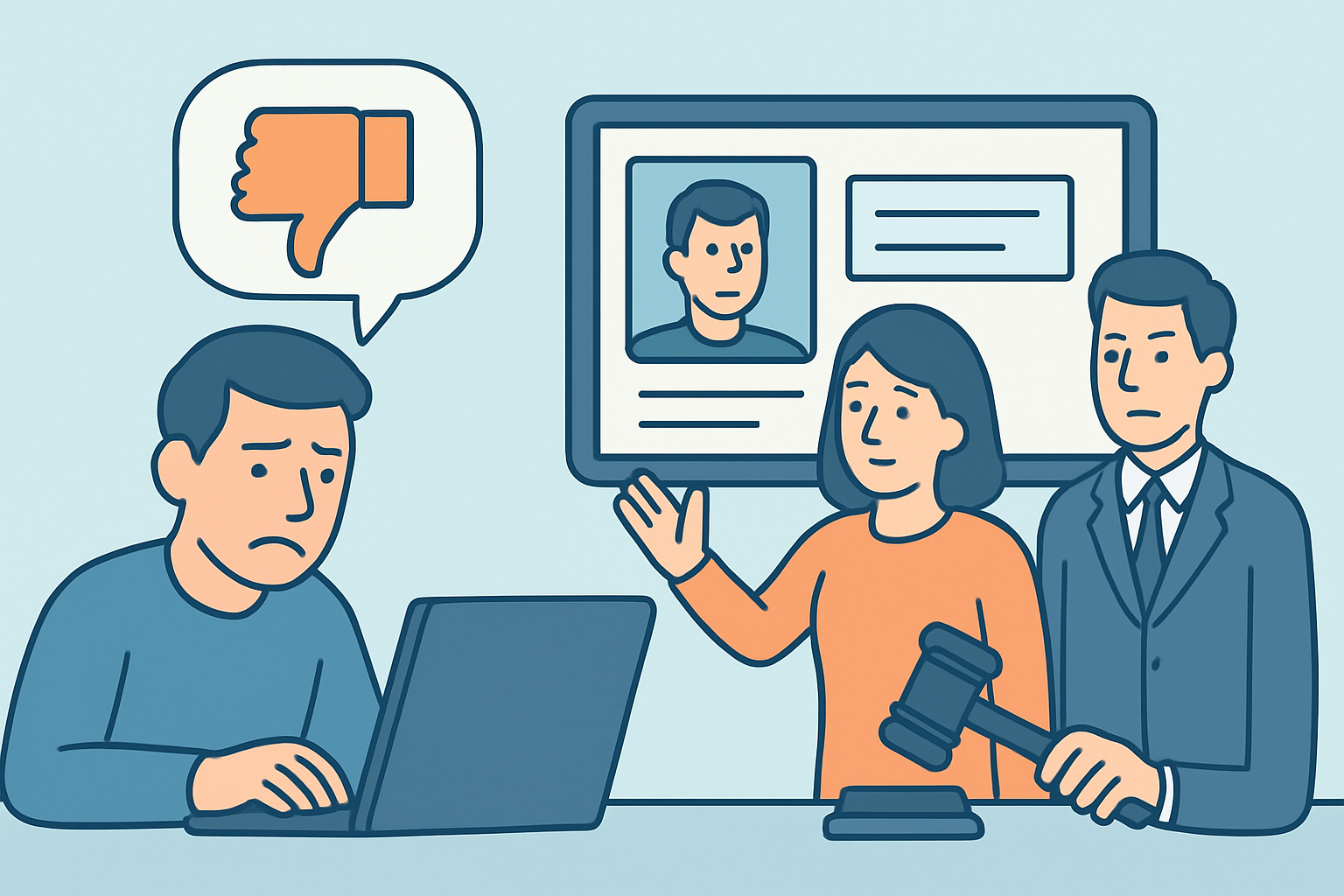
Defamation online rarely announces itself politely – it shows up as a one-star review accusing a dentist of malpractice that never happened, a Glassdoor post claiming a CEO committed fraud, or a Reddit thread naming an employee as a scammer with zero evidence attached. Knowing when that crosses from “unfair but legal” into “actionable defamation” is the single most expensive question a brand manager faces during a reputation crisis, because a lawyer’s letter costs $300–$800 just to draft, and a full defamation suit can run $50,000–$150,000 before trial even starts.
What Actually Counts as Defamation Online
Defamation requires four elements almost everywhere in the US and UK: a false statement of fact (not opinion), publication to a third party, identification of the plaintiff, and resulting harm. Miss any one of those and there’s no case, no matter how much the post stings.
“This restaurant gave me food poisoning” is a factual claim that can be proven true or false with a health inspection report. “This restaurant is a dump and I’ll never go back” is opinion, protected speech in nearly every jurisdiction. Courts in California, under Code of Civil Procedure Section 425.16 (the anti-SLAPP statute), throw out weak defamation claims specifically because plaintiffs confuse insult with defamation.
The distinction matters because roughly 70–80% of angry reviews and social posts a brand wants gone are opinion, sarcasm, or exaggeration – legally untouchable, however damaging they feel.
When Lawyers Should Get Involved
Three situations justify the cost of counsel almost every time.
The first is a specific, checkable factual claim that’s demonstrably false and causing measurable harm – a competitor posting “they were fined $2M by the FTC for deceptive practices” when no such fine exists. That’s not opinion, it’s a fabricated fact, and a cease-and-desist letter from an attorney carries weight a company email never will.
The second is coordinated defamation – the same false claim appearing across TrustPilot, Google, and a fake news site within 48–72 hours, which suggests a competitor or paid attack campaign rather than one disgruntled customer. Coordinated campaigns often involve someone hiding behind anonymity, and unmasking an anonymous poster through a Doe subpoena is a legal process, not a marketing task; the practical mechanics of that process are covered in Handling Anonymous Online Attacks – Legal and Practical Steps.
The third is when the statement targets an individual executive by name and includes an accusation of criminal conduct – fraud, embezzlement, assault. Criminal accusations are defamation per se in most US states, meaning the plaintiff doesn’t even need to prove specific financial damages. That changes the calculus fast, because per se claims settle or resolve faster than standard defamation suits.
When to Skip the Lawyer Entirely
Most negative online content should never reach an attorney’s desk. A one-star review that says “slow service, wouldn’t come back” is opinion about a subjective experience – unwinnable and, honestly, not worth winning. A snarky tweet calling a product “garbage” is hyperbole; courts have consistently ruled that no reasonable reader takes “garbage” as a literal factual claim.
An experienced reputation manager first checks whether the statement is verifiable before drafting anything. If a claim can’t be checked against a receipt, a contract, or a public record, it’s almost certainly opinion, and pursuing it legally invites a Streisand effect – the 2003 case where Barbra Streisand’s lawsuit over an aerial photo of her home turned a barely-seen image into a viral story. Suing over a bad review has the same risk: the legal filing itself often gets more press than the original post.
The practical, non-legal path is usually faster and cheaper: flag the content to the platform (Google, Yelp, and TrustPilot all have fake-review and harassment reporting flows), respond publicly with a calm factual correction, and document everything with timestamps in case the pattern escalates later. Response tone matters here – a defensive or angry public reply does more damage than the original post, which is why having pre-approved response language ready helps; see Response Templates for Negative Reviews That Build Trust for wording that de-escalates rather than provokes.
Myth: “Any False Statement Online Is Defamation”
This is the misconception that drives the most wasted legal spend. Truth is an absolute defense – if the underlying fact is true, it’s not defamation even if it’s stated cruelly or with malice. A former employee writing “I was fired after reporting safety violations” is protected if that’s what actually happened, regardless of how the company feels about the framing.
Opinion, satire, and hyperbole are also protected even when they’re framed as statements of fact-sounding language. And in the US, statements about public figures require proving “actual malice” under New York Times Co. v. Sullivan (1964) – knowledge of falsity or reckless disregard for the truth – a much higher bar than ordinary negligence.
Common Mistakes Businesses Make
The most frequent error is sending a cease-and-desist over an opinion-based review, which usually backfires into a screenshot on Twitter/X captioned “look how this company tries to silence customers.” The second is waiting weeks to document the original post before reporting it, by which point the platform has no record and the poster has edited or deleted the evidence. The third is treating every negative mention as a legal matter instead of triaging severity first – a proper severity assessment, covered in Reputation Crisis Playbook – Hour-by-Hour Response Guide, sorts genuine legal risk from ordinary reputational noise within the first hour rather than the first week.
A Practical Decision Process
A seasoned brand protection lead runs through the same short checklist before calling counsel: is the statement a fact or an opinion, can it be independently verified as false, is real financial or physical harm attached, and is it isolated or coordinated across multiple platforms. Two or more “yes” answers on the first three usually justify at least a paid legal consultation, even if it never becomes a lawsuit. Zero or one “yes” answer means the smarter move is a platform report and a measured public response.
Frequently Asked Questions
Can I sue someone for a bad review that’s just their opinion?
No. Opinion statements, even harsh ones, are protected speech in the US and most other jurisdictions. Courts dismiss these cases regularly, and some states allow the defendant to recover attorney fees from the plaintiff under anti-SLAPP laws.
How long do I have to act before a defamation claim expires?
Statutes of limitations for defamation typically run 1–3 years depending on the state or country, starting from the date of publication. Waiting doesn’t help your case – evidence disappears and damages become harder to prove the longer content stays live uncontested.
Does deleting my own response later hurt a future legal case?
Yes, potentially. Keep dated screenshots of both the original defamatory content and your own responses before making any edits or deletions, since courts and platforms both weigh timestamped evidence heavily.
Most defamation situations resolve without a courtroom, and the businesses that handle them well are the ones that pause long enough to ask “is this actually false and provable” before reaching for a lawyer or an angry reply.