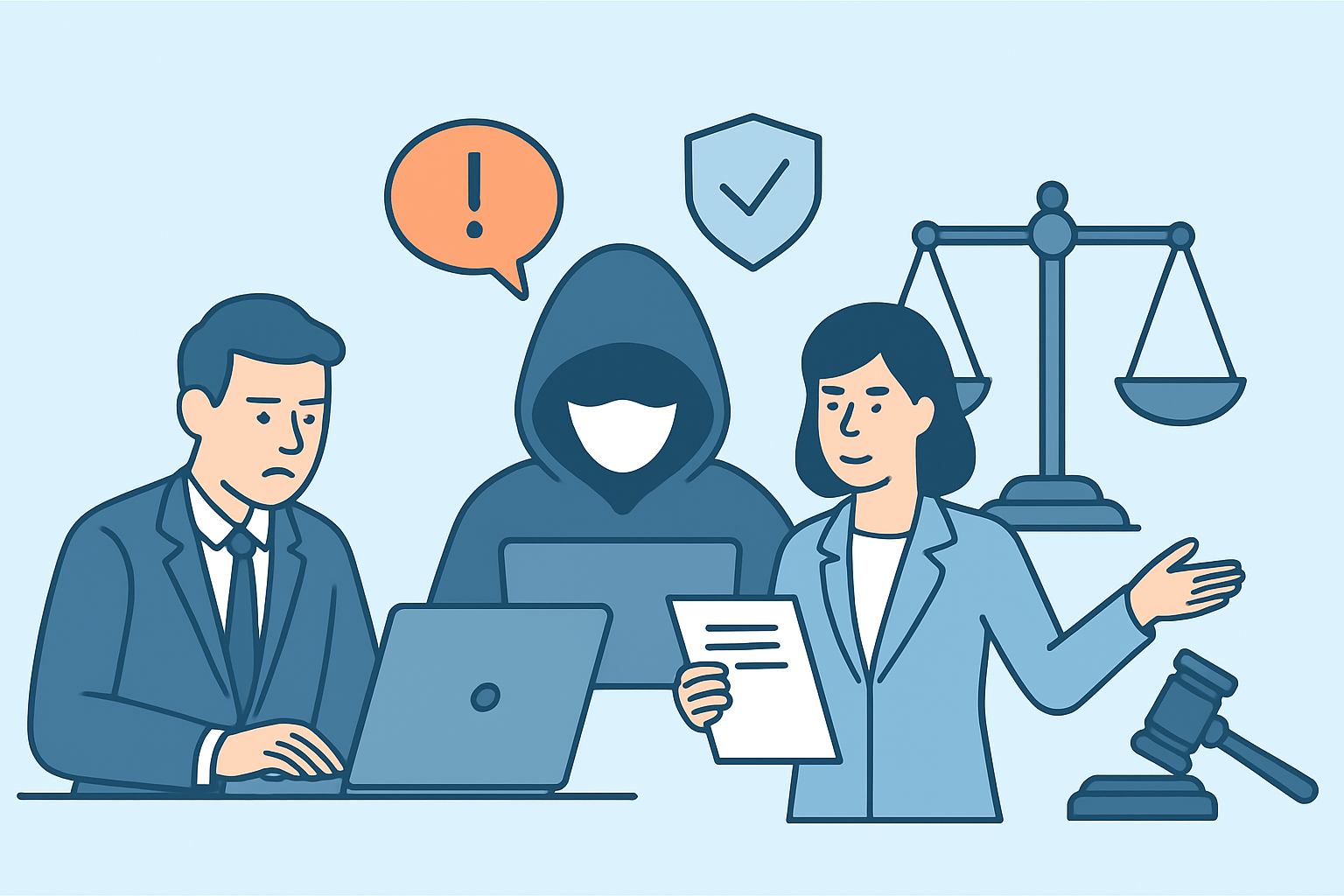
Anonymous negative reviews, harassment campaigns, and impersonation accounts create a specific kind of frustration for brand managers – there’s no name to call, no account to report to a known person, and no clear line between “unhappy customer venting” and “coordinated attack.” This article covers what actually works when a brand is targeted by anonymous actors online, separating the legal options that hold up from the ones that waste six months and a retainer fee.
A mid-sized SaaS company found five nearly identical one-star reviews posted across Trustpilot and G2 within 48 hours, each accusing the product of “stealing customer data” with no specifics, no order numbers, and accounts created the same week. That pattern – timing, vagueness, brand-new profiles – is the first thing worth learning to recognize, because it shapes every decision that follows: whether to pursue a subpoena, whether platform reporting is enough, and how fast the brand needs to respond publicly.
Why anonymity doesn’t mean untraceable
Anonymous does not mean anonymous to everyone. Platforms like Google, Trustpilot, Reddit, and Yelp retain IP addresses, account creation timestamps, device fingerprints, and sometimes payment data tied to accounts, even when the public-facing profile shows no name. That data isn’t visible to the brand being attacked, but it’s discoverable through legal process in most jurisdictions.
The distinction that matters legally is between “anonymous” and “pseudonymous.” A reviewer using a fake name on a real account is pseudonymous – the platform knows who they are, even if the public doesn’t. True anonymity, where no identifying data exists anywhere, is rare outside of Tor-routed posts or burner accounts on platforms with no verification at all. Most attacks fall into the pseudonymous category, which is good news for anyone considering legal action.
Common mistake: treating every angry post as defamation
Not every negative statement is actionable, and this is where a lot of brand managers waste legal budget. Defamation requires a false statement of fact presented as fact, not opinion, that causes measurable harm. “This company is a scam” is often treated by courts as hyperbolic opinion. “This company charged my card without authorization on March 3rd” is a factual claim that can be proven true or false.
A practitioner reviewing a wave of negative posts first sorts them into three buckets: opinion (not actionable), unverifiable complaint (address through customer service, not lawyers), and false factual claim (potentially actionable). Sending a cease-and-desist over a one-star review that just says “bad experience, wouldn’t recommend” tends to backfire – it reads as bullying a customer and often gets screenshotted and reposted, turning a minor problem into a Streisand-effect story.
Step-by-step: responding to a suspected coordinated attack
1. Document everything immediately – screenshot posts with visible timestamps before they can be edited or deleted, and note account creation dates where the platform shows them.
2. Check whether the claims are factual and false, or opinion-based; this determines whether legal escalation is even available.
3. Report through the platform’s own abuse or fake-review process first – Google, Trustpilot, and Yelp all have review-manipulation policies, and platform removal is faster and cheaper than litigation.
4. If the platform doesn’t act within 5–10 business days and the statements are false factual claims, consult a defamation attorney about a “John Doe” subpoena to compel the platform to disclose account data.
5. Prepare an internal holding statement so customer-facing teams aren’t caught off guard while the legal process plays out.
A John Doe lawsuit – filed against an unnamed defendant specifically to obtain a subpoena – typically takes 4 to 8 weeks to produce identifying information from a US-based platform, assuming the platform doesn’t contest it. Costs generally run $3,000–$15,000 depending on jurisdiction and whether the platform fights the subpoena, which Reddit and Yelp have both done in past cases on First Amendment grounds.
Platform reporting versus legal action
Platform reporting is free and often faster, but it only removes content – it doesn’t identify who posted it or stop them from creating a new account. Legal action can unmask a poster and support a restraining order or damages claim, but it’s slow, costly, and not guaranteed to succeed, particularly against platforms in jurisdictions with strong anonymous-speech protections.
The practical approach most experienced brand teams use is parallel tracks: report to the platform immediately for takedown, while simultaneously evaluating whether the content warrants legal escalation. Waiting for legal process to conclude before attempting removal leaves damaging content visible for weeks.
Myth: a lawyer’s letter always gets content removed
A cease-and-desist letter sent directly to an anonymous poster usually goes nowhere, because there’s no verified address to send it to and no way to confirm receipt. Platforms are not obligated to remove content just because a company’s lawyer objects to it – in the US, Section 230 of the Communications Decency Act shields platforms from liability for user-posted content in most cases, meaning the platform’s own content policy, not a demand letter, determines whether something comes down.
The letter becomes useful only after identity is established through subpoena, at which point it’s directed at an actual named person and carries real legal weight. Sending one earlier is mostly theater, and experienced counsel will say so rather than bill for a letter that accomplishes nothing.
When the attack looks technical, not just reputational
Sometimes what looks like an anonymous review campaign is paired with something more concrete: a spoofed lookalike domain sending phishing emails to customers, or a fake social account impersonating an executive. These cases move faster because there’s a clear trademark or fraud angle, and registrars and hosting providers tend to act on abuse reports within days rather than weeks. Reviewing DNS records and domain registration history helps establish whether a look-alike domain is part of the same campaign as the reviews.
Frequently asked questions
Can a business sue an anonymous Google reviewer?
Yes, through a John Doe lawsuit that compels Google to disclose account information tied to the review, but only if the review contains a false statement of fact rather than opinion, and only after the business has evidence the claim is untrue.
How long does it take to unmask an anonymous poster?
Typically 4 to 8 weeks from filing the John Doe subpoena to receiving identifying data, assuming the platform doesn’t contest the request. Contested subpoenas can extend the timeline to several months.
Should a business respond publicly to anonymous negative reviews while legal action is pending?
Generally yes, with a brief, factual, non-defensive response – silence during an active legal process can look evasive to other customers reading the thread, but the public response shouldn’t reference the legal action itself until it’s resolved.
Anonymous attacks are rarely as untraceable as they first appear, and the fastest path to resolution is almost always platform reporting run in parallel with a clear-eyed legal assessment, not a rushed cease-and-desist. Keeping a documented pattern of dated screenshots from day one is the single habit that makes every option afterward – platform escalation, subpoena, or simply proving the story to a journalist – faster and cheaper.