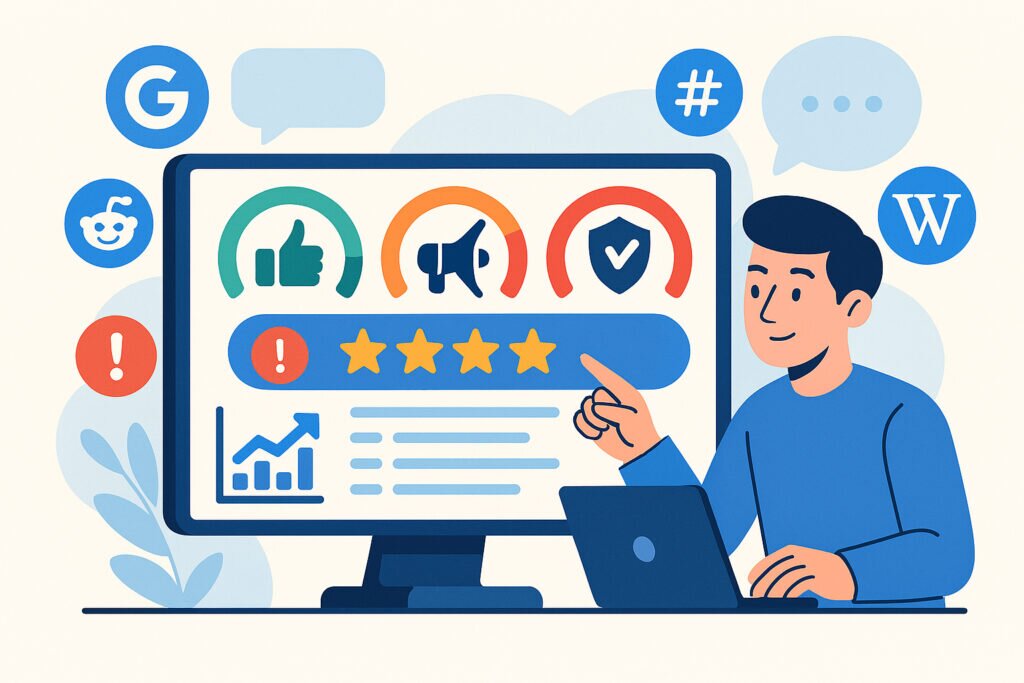
If you’re a business owner or brand manager wondering how to protect your company’s image online, you need a solid understanding of online reputation management. The truth is, your digital reputation is being shaped right now — by customer reviews, social media posts, news articles, and technical signals you might not even be aware of. This guide breaks down exactly what reputation management means in 2026, how to build a system that actually works, and where most businesses go wrong.
I once worked with a services company that had stellar delivery but a terrible online presence. Three outdated negative reviews from 2022 sat at the top of their Google results, and nobody had ever responded. Their inquiry rate had quietly dropped 35% over six months before anyone connected the dots. That’s the thing about reputation — it erodes silently until the damage becomes impossible to ignore.
What Online Reputation Management Really Means
Online reputation management (ORM) is the practice of monitoring, influencing, and protecting how your business appears across the internet. It covers everything from customer reviews on TrustPilot, Google, and Facebook to social media sentiment, news coverage, employee feedback, and even the technical health of your domain.
In 2026, ORM isn’t a one-off project. It’s a continuous process that spans three distinct areas: your online reputation (what people say about you), your brand and marketing presence (how visible and trusted you are), and your technical security posture (whether your domain, email, and website signal trustworthiness to both users and search engines).
Most businesses only react when something goes wrong. The ones that thrive are monitoring all three areas proactively — catching problems in hours, not months.
Why Your Digital Reputation Matters More Than Ever
Around 93% of consumers check online reviews before buying, and roughly 84% trust those reviews as much as a recommendation from a friend. But reputation in 2026 goes well beyond star ratings.
Search engines factor reputation signals into rankings. If your domain lands on a DNS or IP blacklist, your emails stop reaching customers. If Google flags your site through Safe Browsing, traffic drops overnight. A single viral social media post can reshape public perception of your brand in ways that take months to recover from. Your reputation score isn’t just a vanity metric — it directly impacts revenue, partnerships, and hiring.
The Four Pillars of Effective Reputation Management
1. Continuous Monitoring
You can’t fix what you don’t see. Effective brand reputation monitoring means tracking review platforms, social media mentions, news coverage, forums like Reddit, and technical signals — not weekly, but continuously. A reputation crisis can escalate from a single post to mainstream news in under 24 hours. Manual tracking simply can’t keep up, which is why automated monitoring outperforms manual methods in virtually every scenario.
2. Proactive Engagement
Responding to reviews within 24 hours is the baseline. Thank customers for positive feedback. Address negative reviews professionally, acknowledge the problem, explain what you’ve done, and invite them to continue the conversation privately. Here’s something most guides won’t tell you: a well-handled negative review often builds more trust than a wall of five-star ratings, because it shows real accountability.
3. Content and Brand Building
Control what appears when someone searches your brand name. Maintain active, consistent social media profiles. Publish genuinely useful content. Earn media coverage through expertise, not press releases. Monitor your brand sentiment across digital channels so you know whether your efforts are actually shifting perception or just generating noise.
4. Technical Security
This is the pillar most businesses overlook entirely. If your SPF, DKIM, and DMARC records aren’t properly configured, your emails land in spam — and your reputation suffers with every undelivered message. Phishing attempts using lookalike domains can destroy customer trust in days. Regularly check whether your IP or domain appears on blacklists, and monitor for typosquatting threats that could redirect your customers to malicious sites.
A Practical Implementation Plan
Week 1: Baseline Audit
Search your brand name on Google. Check every major review platform — TrustPilot, Google Business, Facebook, G2, Capterra, Yelp, and any industry-specific sites. Look at your social media mentions. Run a technical check on your domain’s blacklist status, email authentication, and Safe Browsing standing. Write down every finding. This is your starting point.
Weeks 2–3: Set Up Automated Monitoring
Manual checks are unreliable and time-consuming. Implement a monitoring system that runs automatically and alerts you when something needs attention. You want hourly checks on critical signals — not a weekly summary email you’ll forget to read.
Week 4 and Beyond: Execute and Iterate
Respond to every existing review you haven’t addressed. Start a systematic process for requesting reviews from satisfied customers. Fix technical issues immediately — blacklist entries, missing email authentication, outdated SSL certificates. Create a simple content calendar to build positive, rankable content around your brand name. Review your reputation data monthly to spot trends early.
The Biggest Myth in Reputation Management
Here’s a misconception that costs businesses real money: “If we just ignore negative reviews, they’ll get buried by positive ones.” They won’t. Search engines and review platforms give weight to recency, engagement, and sentiment diversity. An unanswered negative review from two months ago often ranks higher than a dozen positive reviews from last week — because it signals unresolved conflict, which platforms and users both notice.
The only way to reduce the impact of negative feedback is to respond to it thoughtfully and consistently earn fresh positive reviews. Trying to game the system with fake reviews is even worse — platforms are increasingly sophisticated at detecting fake reviews, and getting caught destroys credibility far more than the original negative review ever could.
Frequently Asked Questions
How long does it take to see results from reputation management?
Expect 4–8 weeks for initial improvements in review response and search visibility. Meaningful shifts in overall brand sentiment typically take 3–6 months of consistent effort. Technical fixes like resolving blacklist issues can show results within days.
Can I remove a negative review from Google or TrustPilot?
Only if it violates the platform’s content policy — for example, if it contains hate speech, is clearly fake, or reviews the wrong business. Legitimate negative feedback, even if unfair, generally stays. Your best response is a professional reply and a steady stream of genuine positive reviews.
Is reputation management only necessary for large companies?
Small businesses actually face higher risk. A large corporation can absorb a reputation hit across thousands of reviews and a broad customer base. A local business with 15 reviews can see its rating — and its revenue — shift dramatically from a single bad month. Early crisis detection matters more, not less, when you’re small.
Managing your online reputation isn’t a one-time task — it’s an ongoing discipline that touches marketing, customer service, and technical infrastructure simultaneously. Start with a clear audit, automate your monitoring, and commit to responding consistently. The businesses that treat reputation as a core operational function, not an afterthought, are the ones that build lasting trust and sustainable growth.