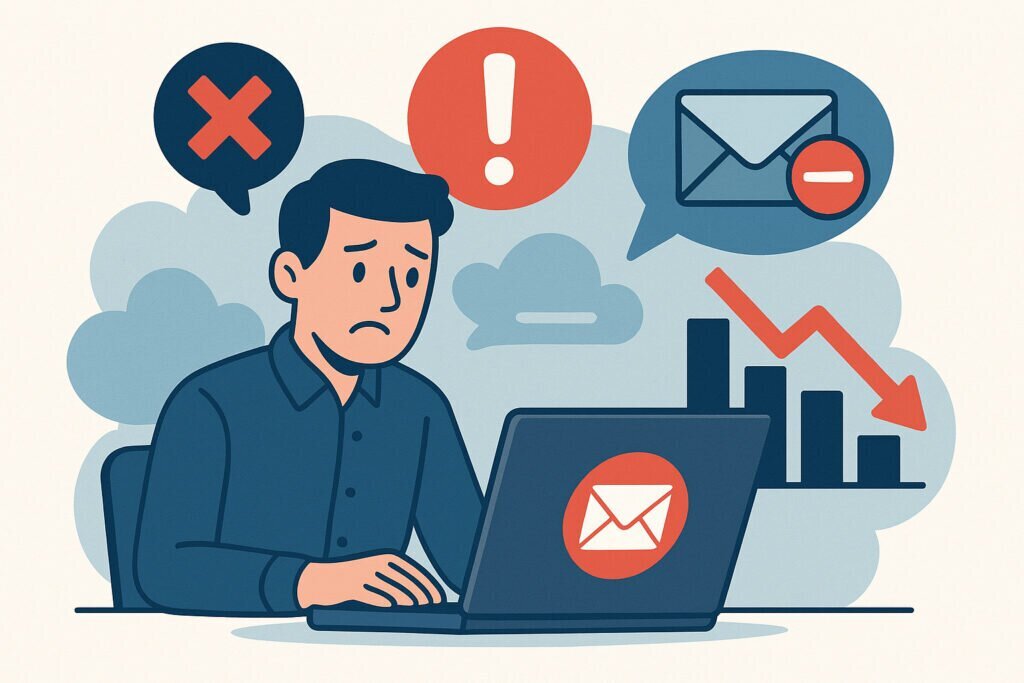
If you run a business that depends on email for communicating with customers, sending invoices, or running marketing campaigns, there is a good chance you have experienced deliverability problems at some point. Maybe your newsletters stopped getting opens. Maybe a client told you they never received your proposal. Or maybe your transactional emails just vanished into thin air. Whatever the case, email deliverability issues are one of those problems that can quietly drain revenue and damage relationships before you even realize something is wrong.
This article breaks down exactly how deliverability problems affect your business, what causes them, and what you can do about it. Whether you are a small business owner or managing communications for a larger organization, understanding this topic can save you real money and a lot of frustration.
What Email Deliverability Actually Means
There is a common misconception that sending an email and having it delivered are the same thing. They are not. Deliverability refers to whether your email actually lands in the recipient’s inbox, as opposed to their spam folder, or worse, getting rejected entirely by the receiving mail server.
Your email provider might show a message as “sent” or even “delivered,” but that does not guarantee the recipient ever sees it. A delivered email that sits in a spam folder is practically the same as one that was never sent at all. This distinction matters more than most people think.
The Financial Cost Is Bigger Than You Expect
Let me put this in concrete terms. If you send a monthly newsletter to 10,000 subscribers and your inbox placement rate drops from 95% to 70%, that means 2,500 fewer people see your message. If your typical campaign generates a 2% click-through rate and each click is worth five euros on average, you are losing roughly 250 euros per campaign. Over a year of monthly sends, that adds up to 3,000 euros from just one email list.
Now multiply that across transactional emails, order confirmations, password resets, and customer support replies. The total cost of poor deliverability across all your email streams can be staggering, especially because it is invisible. You do not get an invoice for lost emails. They just quietly disappear.
A Real-World Example That Stung
I once helped a small e-commerce company that had been running email campaigns for years without issues. One day, their open rates dropped from around 25% to under 8% within two weeks. Sales from email fell off a cliff. They assumed people just lost interest.
It turned out their sending IP had ended up on a blacklist because a batch of old, inactive addresses on their list had been converted into spam traps. Nobody on the team was monitoring blacklists or cleaning the list regularly. It took almost three weeks to identify the problem, get delisted, and rebuild their sender reputation. During that time, they estimated they lost over 15,000 euros in revenue. Three weeks, one overlooked hygiene task, fifteen thousand euros gone.
Trust and Customer Relationships Suffer
Beyond the direct financial hit, deliverability problems erode trust. When a customer does not receive an order confirmation, they worry. When an invoice does not arrive, payment gets delayed. When a support reply lands in spam, the customer feels ignored.
These are not hypothetical scenarios. They happen every day to businesses that have no idea their emails are not reaching people. The damage to customer relationships is hard to measure but very real. People do not usually tell you they did not get your email. They just move on to a competitor who seems more responsive.
Common Causes and What to Watch For
Most deliverability problems come down to a handful of root causes. Missing or misconfigured SPF, DKIM, and DMARC records are probably the most common technical issue. These authentication protocols tell receiving servers that your emails are legitimate. Without them, your messages look suspicious.
Other frequent culprits include sending from a blacklisted IP address, having a high bounce rate from outdated contact lists, getting flagged for spammy content or subject lines, and using a domain with a poor reputation history. Any one of these can tank your inbox placement rate overnight.
The tricky part is that these problems often develop gradually. Your reputation score slips a little, then a little more, and by the time you notice something is wrong, you are already deep in the hole.
Steps You Can Take Right Now
First, check your email authentication. Make sure SPF, DKIM, and DMARC are all properly configured for every domain you send from. This is non-negotiable in 2025. Google and Yahoo both enforce strict authentication requirements now, and messages that fail these checks are increasingly rejected outright.
Second, monitor your domain and IP against major blacklists regularly. Do not wait for a customer to tell you something is wrong. By then, the damage is already done.
Third, clean your email lists. Remove addresses that have not engaged in six months or more. Hard bounces should be removed immediately after the first occurrence. Keeping dead addresses on your list is one of the fastest ways to destroy your sender reputation.
Fourth, watch your engagement metrics closely. A sudden drop in open rates is almost always a signal that something has changed on the deliverability side. Do not assume people just stopped caring about your emails.
Finally, consider using a monitoring service that tracks these factors automatically. Manual checks work, but they rely on someone remembering to do them consistently, and that rarely happens in busy organizations.
Frequently Asked Questions
Can a single spam complaint ruin my deliverability? One complaint will not sink you, but complaint rates above 0.1% are a serious warning sign. Major providers like Gmail track this closely.
How long does it take to recover from a blacklisting? It depends on the blacklist and the severity, but typically anywhere from a few days to several weeks. Some blacklists require manual delisting requests while others expire automatically.
Do I need DMARC if I already have SPF and DKIM? Yes. DMARC ties SPF and DKIM together and tells receiving servers what to do when authentication fails. Without it, your other records are only doing half the job.
Is deliverability only a problem for marketing emails? Absolutely not. Transactional emails like invoices, receipts, and password resets are affected just as much, and the business impact of missing transactional emails is often even more immediate.
Do Not Wait Until It Hurts
The biggest mistake businesses make with email deliverability is treating it as a problem to fix rather than something to monitor continuously. By the time you notice the symptoms, you have already lost revenue, frustrated customers, and damaged your sender reputation.
Proactive monitoring is the only reliable approach. Tools like RepVigil can help by automatically checking your domain against blacklists, verifying SPF, DKIM, and DMARC configuration, and alerting you the moment something goes wrong. It runs 40 different checks covering technical security, brand reputation, and online presence, so you get a complete picture without having to juggle multiple tools. And during the beta period, it is completely free.
Email is still one of the most important communication channels for any business. Protecting your ability to actually reach people’s inboxes is not optional. It is a core business requirement that deserves ongoing attention.