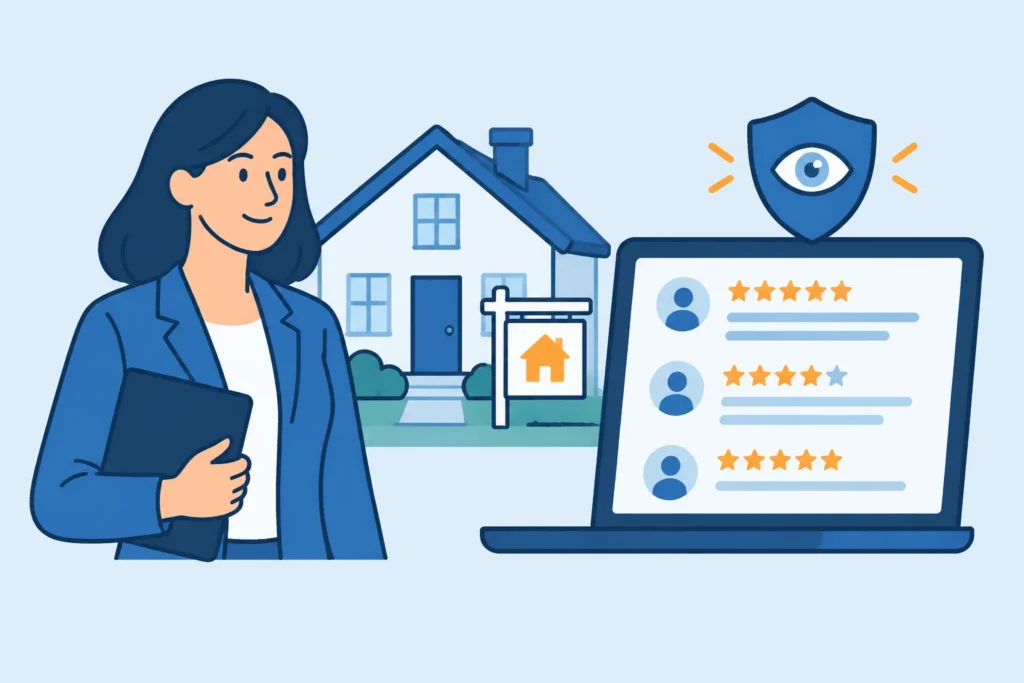
Online reputation for real estate agencies and brokers is often settled before the first phone call. A seller comparing three listing agents, or a relocating buyer picking a brokerage in an unfamiliar city, will usually read Google reviews, Zillow profiles and a few local forum threads first. This article covers where real estate reputation is actually built and lost, how to monitor it without drowning in noise, and which mistakes cost agencies listings.
The stakes are high because each transaction is worth a lot. One lost listing at a $450,000 sale price with a 2.5% commission is over $11,000 in gross commission income. Losing two or three of those a year because of an unanswered review thread is a real budget problem.
Where Real Estate Reputation Lives Today
Real estate reputation is split across more platforms than most industries. Google Business Profile is usually the most important, because sellers search “best realtor near me” and the map pack shows star ratings right away. Zillow and Realtor.com host reviews of individual agents. In Australia, RateMyAgent plays a similar role. In the UK, Google and allAgents carry more weight than the portals themselves.
Yelp still matters in some US metro areas, mostly for property management firms. Facebook recommendations and Nextdoor threads shape opinion in specific neighborhoods. Reddit communities like r/RealEstate and city subreddits are where people ask for blunt, unfiltered recommendations.
There is one structural problem. A brokerage has a brand-level reputation and also 10-200 individual agent reputations that it doesn’t fully control. A franchise office has a third layer: the national brand. A scandal at any level spreads to the others.
The Myth That Referral Businesses Don’t Need Reviews
A lot of veteran brokers believe that because 60-70% of their business comes from referrals and repeat clients, online reviews hardly matter. That belief is out of date.
A referred client almost always searches the agent’s name before calling. If the search shows a 3.6-star Google rating and an unanswered one-star review about a botched inspection negotiation, the referral loses much of its value. Reviews don’t replace word of mouth. They confirm or undercut it. A referral gets the agent onto the shortlist, and the online reputation decides whether they stay on it.
A Scenario Most Brokerages Will Recognize
Picture a mid-sized independent brokerage with 30 agents and a small property management division. Its Google rating slips from 4.7 to 4.2 over about five months. Leadership assumes it’s a sales problem, so nobody looks closely.
When someone finally goes through the reviews, most of the new negative ones come from tenants of the property management side: slow repair responses, disputed security deposits. Sellers and buyers are still happy. But all of the reviews land on one Google profile, and sellers comparing brokerages only see the star average.
Fixing it takes three steps. The property management division gets its own Business Profile, which is legitimate because it has a separate service line and staff. Every tenant review gets a factual, calm reply. Recent sellers get asked consistently for reviews. Recovery takes about eight months, which is much longer than it would have taken if someone had noticed the trend in the second month.
How to Set Up Reputation Monitoring for a Brokerage
A seasoned marketing director at a brokerage starts with an inventory and only then picks tools. A practical sequence:
Step 1 – Map every profile. List the brokerage’s Google profiles (one per office), each agent’s Zillow and Realtor.com profiles, Facebook pages, Yelp listings and any regional portals. Expect to find duplicate or abandoned profiles, often created by agents who left years ago.
Step 2 – Claim and consolidate. Claim unverified profiles and request merges for duplicates. For agents who have left, update or close the profiles so former clients aren’t sent to someone who no longer works there.
Step 3 – Set alert tiers. A one-star review mentioning discrimination, fraud or a named agent needs a response the same day. Mild complaints about scheduling can wait for a weekly review cycle. Firms with several offices should read the guidance on reputation strategy for multi-location businesses, because office-level ratings drift apart quickly.
Step 4 – Track brand mentions beyond reviews. Watch for your brokerage name on Reddit, in local news and in Facebook community groups. A local news story about a failed closing or a licensing complaint can rank above your own website for months.
Step 5 – Assign owners. Every alert needs one named person responsible for it. “Marketing handles it” usually means nobody does.
The Technical Side: Wire Fraud and Domain Spoofing
Real estate is one of the most heavily targeted sectors for business email compromise. The FBI’s Internet Crime Complaint Center has warned about real estate wire fraud for years. The usual pattern: a criminal sends fake closing instructions from a lookalike domain or a spoofed brokerage address, and the buyer wires their down payment to the wrong account.
When this happens, the victim blames the brokerage in reviews, in local media and sometimes in court, even if the brokerage’s systems weren’t breached. Publishing a DMARC policy at p=reject, correctly configured SPF and DKIM records, and watching for lookalike domain registrations all lower the risk. This guide on how email authentication prevents spoofing and phishing explains the mechanics. Brokerages should also tell clients in writing, early and more than once, that wiring instructions will never change by email.
Common Mistakes Agencies Make
The first mistake is replying to negative reviews with transaction details. Agents often defend themselves by bringing up the client’s financing problems, inspection results or negotiation stance. That can break confidentiality obligations and state licensing rules, and it always looks bad to the next reader. A short, factual reply that moves the conversation offline works better. Here are some response templates for negative reviews that build trust that can be adapted for real estate.
The second mistake is watching only the brokerage profile and ignoring agent profiles. One agent with a pattern of complaints about pressure tactics can drag the whole brand down, and leadership usually finds out from a lost recruit or a complaint to the board.
The third mistake is asking for reviews only after great closings. Selective asking may look harmless, but systematically filtering out unhappy clients can count as review gating, which Google’s policies prohibit. The FTC’s 2024 rule on fake reviews also raised the risk of manipulating reviews in the US. Ask every client after every closing.
Edge Cases Worth Knowing
Fair housing raises the stakes for real estate in particular. A review alleging discrimination should go to the broker of record and possibly legal counsel before anyone replies publicly. Commercial brokerages have a different problem: their clients rarely leave public reviews, so their reputation depends more on press coverage, LinkedIn and industry rankings than on star ratings. Solo agents and teams under five people can usually handle monitoring by hand in 20-30 minutes a week. Brokerages with more than 25 agents generally can’t.
The changes to buyer-agent commission practices that took effect in August 2024 after the NAR settlement also led to more reviews complaining about fees and buyer agreements. Agencies should explain compensation clearly at the start so a misunderstanding doesn’t end up as a one-star review.
FAQ
Should individual agents manage their own reviews or should the brokerage?
Agents should own their profiles and replies. The brokerage should set response standards, watch all profiles centrally and step in on anything involving legal, fair housing or fraud claims.
Can a brokerage remove a negative Zillow or Google review?
Only if the review breaks platform policy, for example if it is fake, off-topic, harassing or posted by someone who was never a client. Use the platform’s reporting tools and document the reason. Honest negative reviews stay up and should get a professional reply.
How many reviews does a real estate agent need to look credible?
In most US markets, 15-25 recent reviews on Google or Zillow puts an agent in a competitive position. How recent they are matters as much as how many: if the newest review is two years old, buyers will assume the agent is inactive.
Final Practical Tip
Online reputation for real estate agencies and brokers depends on consistent habits. Map every profile, separate service lines that attract different kinds of reviews, lock down your email domain against spoofing, and ask every client for a review after every closing. Start with a 30-minute audit this week, and expect to find at least one profile or problem you didn’t know about.