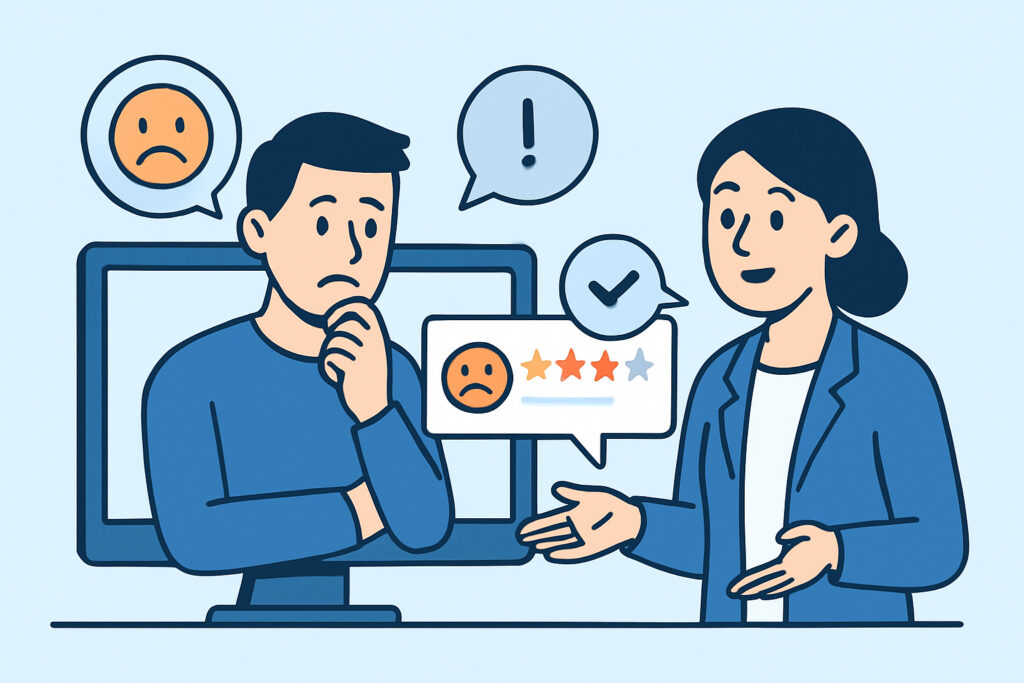
A single poorly handled negative review response can spiral into a social media firestorm that damages your brand for months. Learning how to respond to negative reviews without making it worse is crucial for protecting your digital reputation and maintaining customer trust. This guide covers proven strategies for turning negative feedback into opportunities while avoiding the common mistakes that escalate online reputation crises.
Negative reviews are inevitable, but your response determines whether they become isolated incidents or reputation disasters. The key lies in understanding that every public response is read by dozens of potential customers – not just the original reviewer.
Understanding the Stakes of Your Response
Your review responses carry more weight than the original review itself. Studies show that 89% of consumers read business responses to reviews, and 45% of them are more likely to visit a business that responds to negative reviews professionally.
A restaurant chain recently demonstrated this principle when they responded to a complaint about slow service. Instead of getting defensive, they acknowledged the issue, explained they were training new staff, and invited the customer back. The response received more likes than the original negative review, and several commenters praised the company’s transparency.
However, when businesses respond emotionally or dismissively, the backlash often becomes more damaging than the original complaint. One small software company turned a minor billing complaint into a viral Twitter controversy by questioning the customer’s intelligence in their public response.
The Psychology Behind Negative Reviews
Most negative reviewers aren’t trying to destroy your business – they’re expressing frustration and seeking acknowledgment. Understanding this motivation changes how you approach your response strategy.
Customers leave negative reviews when they feel unheard or dismissed. Their primary need is validation that their experience mattered. When you respond defensively or ignore their concerns, you confirm their suspicion that your business doesn’t care about customer satisfaction.
The myth that negative reviewers are always unreasonable or impossible to please is simply wrong. Research indicates that 70% of customers who leave negative reviews will update or remove them after receiving a thoughtful response that addresses their concerns.
The Immediate Response Framework
Speed matters, but accuracy matters more. Respond within 24-48 hours when possible, but never rush a response without proper consideration. Here’s the proven framework that prevents escalation:
Start with acknowledgment, not defense. Thank them for taking time to share their feedback. This immediately shifts the tone from confrontational to collaborative.
Take responsibility for their experience, even if you disagree with their interpretation. Say “We’re sorry your experience didn’t meet expectations” instead of “We’re sorry you feel that way.” The difference is crucial – one accepts responsibility while the other dismisses their feelings.
Provide specific next steps. Vague promises to “do better” sound hollow. Instead, explain exactly what you’ll investigate or how you’ll prevent similar issues.
Move the conversation offline quickly. Include contact information and invite them to discuss details privately. This shows you’re serious about resolution while preventing public back-and-forth exchanges.
What Never to Include in Your Response
Certain phrases and approaches guarantee negative backlash. Never question the customer’s honesty or suggest they’re lying. Even if you suspect a fake review, handle it through the platform’s reporting system rather than public confrontation.
Avoid explaining company policies in detail. Customers don’t care about your internal processes – they care about their experience. Lengthy policy explanations make you sound bureaucratic and dismissive.
Never mention other positive reviews or customers. Saying “Most customers love us” invalidates their specific experience and sounds defensive. Each complaint deserves individual attention.
Don’t ask them to email you without providing actual contact information. Generic responses asking customers to “reach out” without specific email addresses or phone numbers appear automated and insincere.
Turning Criticism Into Reputation Wins
The most successful review responses demonstrate how your business handles problems, not just successes. Potential customers watching your responses want to know you’ll treat them fairly if something goes wrong.
Use specific language that shows you understood their complaint. If they mentioned waiting 20 minutes for food, reference that specific timeframe in your response. This proves you actually read and considered their feedback.
When appropriate, share what you learned or changed because of their feedback. A hotel chain gained significant positive attention by explaining how a guest’s accessibility complaint led them to audit and improve their entire accommodation system.
Managing Multiple Platform Responses
Different platforms require different response approaches. Google Reviews allow longer responses and are heavily weighted in local search results. Yelp responses appear prominently and influence the platform’s recommendation algorithm. Facebook reviews integrate with your social media presence and reach your existing followers.
Monitoring customer reviews across platforms ensures you catch negative feedback quickly, before it spreads to other channels. Many reputation crises start on one platform and spread when businesses fail to respond promptly.
TrustPilot and G2 reviews carry significant weight with B2B buyers, so responses there should emphasize professional credibility and problem-solving capabilities. Capterra responses often influence software purchasing decisions, so focus on demonstrating customer support quality.
Recognizing When Not to Respond
Some negative reviews require no public response. Reviews that contain profanity, personal attacks, or completely fabricated claims often diminish their own credibility without your input. Responding to obviously fake reviews can actually draw more attention to them.
However, even when you don’t respond publicly, document these reviews for pattern analysis. Multiple fake reviews might indicate a coordinated attack that requires early crisis detection measures.
Long-term Response Strategy
Track whether your responses lead to follow-up engagement or review updates. Customers who receive thoughtful responses often become advocates, but only if you follow through on promised actions.
Analyze your negative review themes monthly. If multiple customers complain about the same issue, your response strategy should include addressing the root cause, not just individual complaints.
Use review response patterns to improve customer service quality monitoring across all touchpoints. The issues raised in reviews often reflect broader operational problems that affect customer satisfaction.
Frequently Asked Questions
How long should I wait before responding to a negative review?
Respond within 24-48 hours when possible. Faster responses show you’re actively monitoring feedback, but don’t sacrifice quality for speed. A well-crafted response after 48 hours beats a rushed response after 2 hours.
Should I respond to negative reviews that are clearly fake or unfair?
Generally no, unless the fake review contains specific false claims that might mislead potential customers. Instead, report obviously fake reviews through the platform’s official channels. Responding publicly to fake reviews often backfires by drawing more attention to them.
What if the customer doesn’t respond to my follow-up after I’ve responded publicly?
Don’t chase them with additional public comments. Your professional public response already demonstrated your commitment to customer service for other readers. Follow up privately once, then focus on preventing similar issues for future customers.
The most important lesson in negative review management is that your response reflects your brand values more than the original complaint ever could. Every response is an opportunity to demonstrate professionalism, accountability, and genuine care for customer satisfaction – qualities that turn casual browsers into loyal customers.