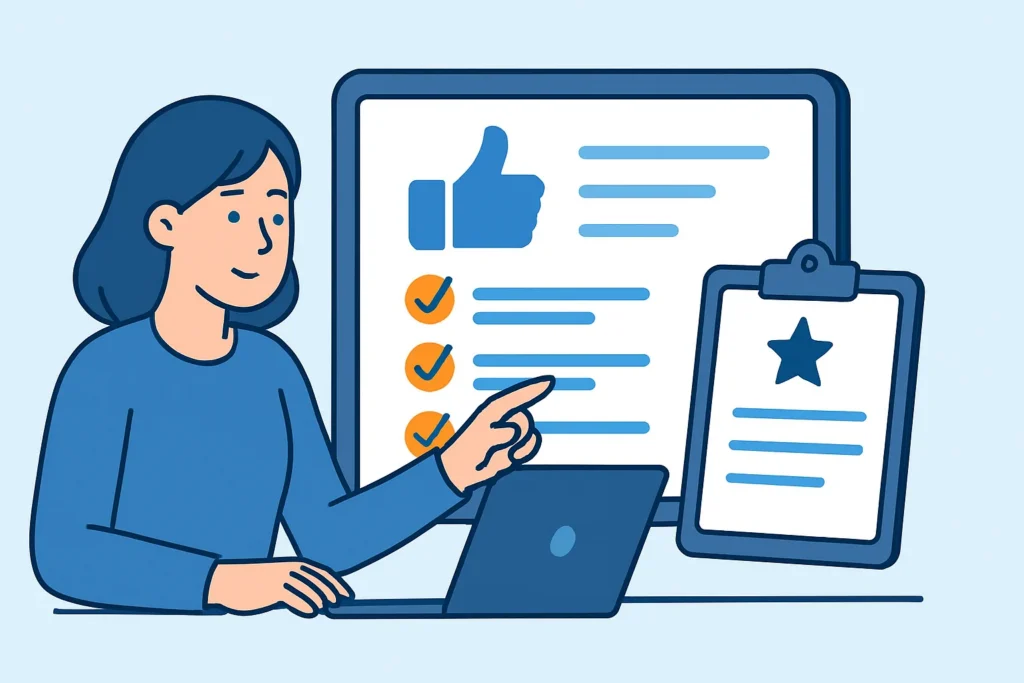
Choosing your first reputation monitoring service usually happens at an awkward moment – either right after a bad review spiral caught the team off guard, or when someone in leadership asks “what are people saying about us?” and nobody has a good answer. This guide explains how to pick a reputation monitoring service that fits your actual risks, budget and team size, so you don’t spend six months with a tool that tracks the wrong things. You’ll get a practical evaluation process, the mistakes first-time buyers make most often, and the edge cases where the usual advice doesn’t apply.
Start With Your Risk Profile, Not the Feature List
The biggest benefit of a well-chosen service is simple: you hear about problems in hours instead of weeks. To get there, you need to know which problems matter to you.
An experienced brand manager starts by listing where damage would actually come from. A restaurant group lives and dies on Google and Yelp reviews. A B2B SaaS company cares more about G2, Capterra and Reddit threads. A financial services firm may find that its biggest exposure is technical – spoofed emails sent from its domain or a lookalike domain hosting a phishing page.
Spend 30 minutes writing down your top five threat scenarios before you look at a single vendor website. Rank them by likelihood and cost. That list becomes your scoring sheet, and it keeps you from being dazzled by dashboards that cover channels you’ll never need.
What a Reputation Monitoring Service Should Cover
Most first-time buyers think of reputation as reviews and social mentions. That’s only one layer. Solid digital reputation coverage spans three areas.
Online reputation covers customer reviews on Trustpilot, Google, Facebook, Yelp and industry platforms, plus fake review detection, negative media coverage and employer reviews on sites like Glassdoor. Brand and marketing signals include brand sentiment, social visibility, competitor movement and early crisis detection. Technical security covers the things that quietly destroy trust: DNS and IP blacklists such as Spamhaus, missing SPF, DKIM and DMARC records, typosquatted domains and Google Safe Browsing warnings.
The technical layer is the one people skip, and it’s often where the worst surprises sit. A domain listed on a blacklist can push sales emails into spam folders for days before anyone connects the drop in reply rates to a reputation issue.
A Step-by-Step Evaluation Process
A practical evaluation takes about two weeks. Here’s a sequence that works for most teams under 50 people:
1. Map your threat scenarios and the platforms they live on (day 1).
2. Shortlist 2-3 services that cover at least 80% of those platforms.
3. Run each on your own brand for 7-10 days, side by side.
4. Compare what each one caught against a manual spot check of Google, Reddit and your main review sites.
5. Check alert quality – how many alerts were actionable versus noise.
Step 4 is the one that reveals the truth. If your manual check finds a two-star Google review from Tuesday and the service didn’t flag it until Friday, you’ve learned more than any sales demo could tell you. For a deeper comparison framework, see this guide on choosing the right reputation monitoring tool.
Alert Frequency and Signal Quality
Monitoring frequency matters more than people expect. A daily digest is fine for slow-moving review profiles. It’s far too slow for a viral TikTok complaint or a phishing site impersonating your login page, where the meaningful window is often 2-6 hours.
Signal quality matters just as much. A tool sending 40 alerts a day trains your team to ignore all of them. Look for severity levels, clear separation between critical issues and informational ones, and a reputation score that breaks down into components rather than one opaque number. If you can’t explain to your CEO why the score dropped from 78 to 64, it’s not useful. The article on reputation metrics that actually matter goes deeper into which numbers deserve attention.
The Myth That You Need an Enterprise Platform
A common misconception: serious reputation management requires a serious budget. Enterprise suites like Brandwatch, Meltwater or Talkwalker are powerful, but they’re built for global brands with dedicated analysts, and contracts commonly run into five figures per year.
A 12-person agency or a regional retail chain doesn’t need Boolean query builders across 40 languages. It needs reliable review monitoring, crisis detection on a handful of channels and basic domain security checks. Entry-level social listening tools typically sit around $50-300 per month, and some free services cover a surprisingly broad set of checks. Start smaller than you think, then upgrade when you hit real limits.
The exception: regulated industries. Healthcare providers, law firms and financial services companies may need audit trails, data retention controls and GDPR-compliant processing agreements from day one. In those cases, compliance requirements outweigh price.
Common Mistakes First-Time Buyers Make
Buying after the crisis instead of before. A typical pattern: a mid-sized eCommerce store gets hit with a wave of one-star reviews after a shipping delay, signs up for monitoring the following week, and then discovers the service has no historical baseline. Without 60-90 days of prior data, you can’t tell whether sentiment is recovering or just noisy.
Trusting sentiment scores without reading the source. Automated sentiment analysis regularly misreads sarcasm, industry jargon and non-English content. A Finnish or German review might be flagged as neutral when it’s clearly angry. Someone needs to read the actual mentions behind any significant score change.
Ignoring the technical layer entirely. Teams obsess over Trustpilot stars while a typosquatted domain sends invoices to their customers. Brand protection includes your domain, your email authentication and your blacklist status – not just what people write about you.
Edge Cases Worth Planning For
Very small teams, say under 5 people, often do better with a fully automated service that sends only critical alerts. They simply don’t have hours to triage dashboards. The tradeoffs are covered well in this comparison of automated versus manual tracking.
Multi-language markets need explicit testing. If 30% of your customers write reviews in Spanish or Polish, confirm the service actually parses those platforms and languages before committing. Brands with low online volume face the opposite problem – a tool built for millions of mentions may show nearly empty dashboards, which says nothing about whether it would catch the one review that matters.
FAQ
How long should a trial period last before deciding?
At least 7-10 days, and ideally a full month. Shorter trials rarely capture enough real events to judge alert accuracy or coverage gaps.
Can free reputation monitoring be enough for a small business?
For many small businesses, yes. If the service covers your main review platforms, basic sentiment and domain security, it handles the most common threats. Upgrade when you need deeper competitor analysis or custom reporting.
Who in the company should own reputation monitoring?
Usually marketing or communications, with a clear escalation path to customer service for reviews and IT for technical alerts. Shared ownership without a named owner means alerts go unanswered.
Final Practical Tip
Picking your first reputation monitoring service comes down to matching coverage to real risks, testing alert quality against your own manual checks, and not overbuying. Map your threats first, run a short side-by-side trial, and make sure technical security is part of the picture. Then assign one named person to read every critical alert within the same business day – that habit protects your brand reputation more than any single feature does.