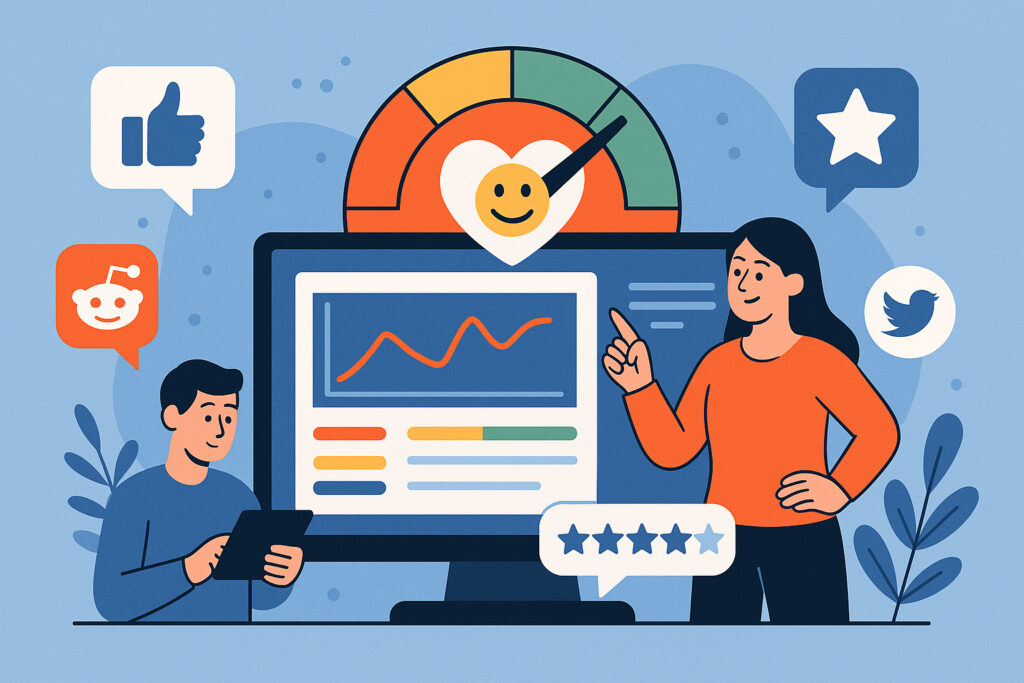
If you’re running a business today, you already know that your brand’s reputation isn’t built in one place anymore. It’s scattered across social media, review sites, forums, news articles, and countless other digital corners where people talk about you. The problem? Most companies have no systematic way to track what’s actually being said. They only find out when something has already blown up, and by then, it’s too late to respond effectively.
Measuring brand sentiment isn’t just about counting likes or tracking mentions. It’s about understanding whether people feel positively, negatively, or neutral about your brand across every channel where your name appears. This insight helps you catch problems early, double down on what’s working, and make informed decisions about your marketing and customer service strategies.
Why Traditional Monitoring Falls Short
Many businesses rely on Google Alerts or basic social media notifications. I’ve seen this firsthand with clients who thought they had everything covered, only to discover weeks later that a negative Reddit thread had been gaining traction or that their Trustpilot score had dropped significantly. These basic tools only scratch the surface and often miss the conversations happening in less obvious places.
The real challenge is that sentiment isn’t always obvious from the words alone. Someone might say “thanks for nothing” sarcastically, or use seemingly positive language while actually complaining. Context matters enormously, and manual tracking simply doesn’t scale when you need to monitor multiple platforms simultaneously.
Identifying the Right Channels to Monitor
Start by mapping where your customers actually spend time talking about brands like yours. For B2B companies, this might be LinkedIn, G2, Capterra, and industry forums. For consumer brands, focus on Facebook, Instagram, Twitter, Reddit, and review platforms like Google Reviews, Yelp, or Trustpilot.
Don’t make the mistake of monitoring everything equally. Prioritize based on where your target audience is most active and where negative sentiment could cause the most damage. A complaint on a niche industry forum might matter more than a random tweet, depending on your business model.
Setting Up Your Sentiment Tracking System
You need a structured approach that goes beyond manual checking. Start by establishing baseline metrics for each channel. What’s your current average rating on review sites? What percentage of social media mentions are positive versus negative? Without these benchmarks, you can’t measure improvement or spot declining trends.
Create a consistent tagging system for categorizing sentiment. I typically use a simple three-tier system: positive, neutral, and negative. Some businesses add more granularity with very positive and very negative categories, but keeping it simple makes analysis faster and more actionable.
The key is frequency. Checking sentiment once a month isn’t enough. Ideally, you want at least daily monitoring for active brands, or even hourly checks if you’re in a crisis-prone industry or during product launches. This is where automation becomes essential because no team has time to manually check ten different platforms every single day.
Analyzing Review Platforms and Customer Feedback
Review sites like Trustpilot, Google Reviews, and industry-specific platforms are goldmines for understanding true customer sentiment. Pay attention not just to the star ratings but to the content of reviews. A three-star review explaining specific issues is more valuable than a five-star review that just says “great product.”
Track review velocity too. A sudden increase in negative reviews, even if your overall score remains decent, signals a problem that needs immediate attention. Similarly, watch for patterns in complaints. If multiple customers mention the same issue within a short timeframe, that’s not a coincidence—it’s a systemic problem you need to fix.
Monitoring Social Media Conversations
Social media sentiment is trickier because conversations happen in real-time and can spread rapidly. Set up monitoring for direct mentions of your brand name, common misspellings, product names, and even your executives’ names. Don’t forget hashtags related to your industry or campaigns.
But here’s what many miss: you also need to track untagged conversations. People often complain about brands without directly mentioning them. Search for phrases like “worst customer service ever” combined with your industry or product category. These conversations might not tag you, but they’re still shaping perception among potential customers.
Tracking News and Media Coverage
Traditional media and online publications carry significant weight in shaping brand perception. Set up alerts for mentions in news articles, blogs, and press releases. Pay special attention to the tone and context—is the article highlighting your innovations or covering a controversy?
Media sentiment can cascade into other channels. A negative news article often triggers waves of social media discussion and can influence review ratings. This is why early detection matters so much. If you catch negative media coverage immediately, you can respond quickly and potentially shape the narrative before it spreads.
Understanding Employee and Employer Reputation
Your brand isn’t just what customers think—it’s also what current and potential employees say. Platforms like Glassdoor directly impact your ability to attract talent, and negative employer reputation eventually seeps into customer perception. After all, unhappy employees rarely deliver great customer experiences.
Monitor employer review sites with the same rigor as customer review platforms. Low scores or concerning patterns in employee feedback should trigger internal investigations and improvement initiatives.
Common Myths About Sentiment Analysis
One major misconception is that automated sentiment analysis is perfectly accurate. It’s not. Tools can misread sarcasm, cultural context, and industry jargon. Always combine automated tracking with human review of flagged items.
Another myth is that neutral sentiment doesn’t matter. Actually, neutral mentions often represent opportunities. Someone asking “has anyone tried this brand?” on Reddit is neither positive nor negative, but it’s a chance to engage and turn them into an advocate.
Turning Data Into Action
Collecting sentiment data is useless if you don’t act on it. Create a response protocol based on sentiment severity. Critical negative sentiment requires immediate response—within hours, not days. Moderate issues can wait for next business day, but still need attention.
Use positive sentiment strategically too. When you spot enthusiastic customers, reach out to thank them, ask for testimonials, or invite them to case studies. These advocates are your most valuable marketing asset.
Track sentiment trends over time rather than fixating on individual mentions. One negative comment isn’t a crisis, but a steady decline in positive sentiment over weeks signals a real problem that needs strategic intervention.
Frequently Asked Questions
How often should I check brand sentiment? Daily monitoring is ideal for most businesses, with more frequent checks during launches, campaigns, or crisis situations. Automated systems can monitor continuously while alerting you to significant changes.
What’s a good brand sentiment score? This varies by industry, but generally, aim for at least 60-70% positive mentions, less than 15% negative, with the rest neutral. More important than absolute numbers is tracking your trend direction.
Should I respond to every negative mention? Not necessarily. Respond to legitimate complaints and concerns, but don’t feed trolls or engage with clearly fake reviews. Focus your energy where you can make a real difference.
How do I measure sentiment for a new brand with little data? Start by monitoring competitor sentiment to understand industry baselines, then track your own growth from day one. Even small amounts of data become valuable when tracked consistently over time.
The reality is that brand sentiment measurement isn’t a one-time project—it’s an ongoing discipline that requires consistent attention and the right tools. The companies that get this right are the ones that catch problems before they become crises and capitalize on positive momentum when it builds.