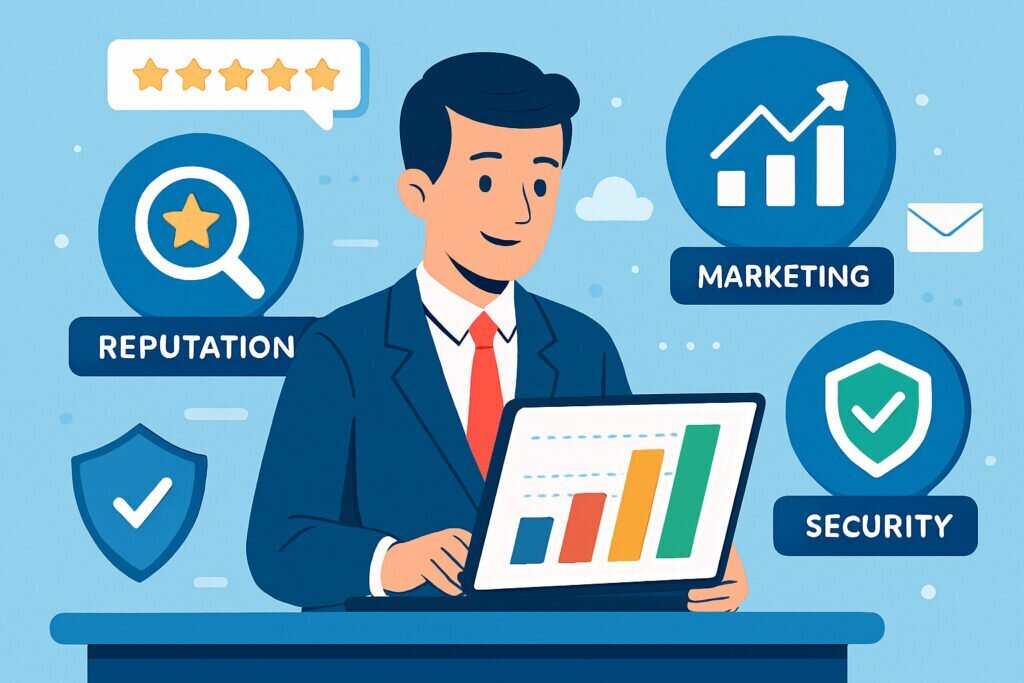
If you run an online business, you already know that trust isn’t something you can buy with a fancy logo or a well-written About page. Trust is earned slowly, lost quickly, and almost impossible to rebuild once it’s gone. The good news? There’s a surprisingly practical way to strengthen it that most businesses overlook: being transparent about how you monitor and protect your own reputation.
This article is for business owners, marketers, and brand managers who want to stop guessing about their online reputation and start managing it openly. I’ll walk you through why transparent monitoring matters, how to actually do it, and what pitfalls to avoid along the way.
Why Transparency Is the Foundation of Trust
Most businesses treat reputation management like a secret operation. They quietly check reviews, silently respond to complaints, and hope nobody notices the bad stuff. The problem is, customers aren’t stupid. They can tell when a company is hiding something, and that gut feeling erodes trust faster than any negative review ever could.
When you openly monitor your reputation and share what you find, something interesting happens. Customers start to see you as honest. Not perfect — honest. And in a world full of polished corporate messaging, honesty stands out.
Think about it from the customer’s perspective. Would you rather buy from a company that pretends everything is always great, or from one that says “we track our reviews across seven platforms, we check for security threats every hour, and here’s our current score”? The second one feels real. That’s the power of transparency.
What Transparent Monitoring Actually Looks Like
Let me be specific, because “be transparent” is easy advice and hard to execute.
Transparent monitoring means you actively track what people say about your brand across review sites, social media, forums, and news outlets. It means you check your technical security — DNS blacklists, email deliverability, phishing risks, domain health — on a regular basis. And most importantly, it means you don’t hide the results.
Here’s a step-by-step approach that works:
Step 1: Set up automated monitoring. You need a system that checks your reputation continuously, not just when you remember to Google your company name. Tools like RepVigil can run dozens of tests automatically, covering everything from Trustpilot and Google reviews to SPF records and typosquatting risks. The key is automation — manual checking is inconsistent and always falls behind.
Step 2: Establish your baseline. Before you can improve anything, you need to know where you stand. Run a full scan of your brand’s online presence. Look at review scores, social sentiment, technical security status, and media mentions. Write it all down. This is your starting point.
Step 3: Create a response protocol. Decide in advance how you’ll respond to different types of issues. Negative review? Respond within 24 hours. Security alert? Investigate within one hour. Brand mention in a negative news article? Have a statement template ready. Having a protocol removes the panic and ensures consistency.
Step 4: Share your findings publicly. This is where most businesses hesitate. But consider publishing a monthly or quarterly “brand health report” on your website or blog. Show your review scores, mention how many issues you resolved, and be upfront about areas where you’re working to improve. Customers respect this enormously.
A Quick Story From My Own Experience
A few years ago, I was managing a portfolio of web services and noticed that one of our domains had quietly ended up on an email blacklist. We had no idea how long it had been there. Customers weren’t receiving order confirmations, support replies were bouncing, and nobody told us — they just stopped buying.
That experience taught me two things. First, you can’t fix what you don’t monitor. Second, the reputational damage from a technical problem you didn’t catch is far worse than any honest mistake you openly address. Since then, I’ve made automated monitoring a non-negotiable part of every service I run. It’s not glamorous work, but it’s the kind of work that prevents disasters.
Common Myths About Reputation Monitoring
“Only big companies need reputation monitoring.” This is flat-out wrong. Small businesses are actually more vulnerable because a single bad review or a blacklisted domain can represent a much larger percentage of their total online presence. If you have ten reviews and one is terrible, that’s ten percent of your reputation right there.
“Monitoring means obsessing over every negative comment.” Not at all. Good monitoring is systematic, not emotional. You set thresholds, you automate alerts for critical issues, and you review trends over time. The goal isn’t to chase every complaint — it’s to catch patterns and serious threats before they escalate.
“Transparency makes you look weak.” The opposite is true. Companies that openly share their monitoring results and acknowledge areas for improvement are consistently rated as more trustworthy by consumers. Hiding problems is what makes you look weak, especially when those problems eventually surface on their own.
Practical Tips for Getting Started Today
You don’t need a massive budget or a dedicated team to start. Here are some things you can do this week:
Sign up for a comprehensive monitoring service that covers reviews, social mentions, and technical security in one place. RepVigil, for instance, runs 40 different tests across three major areas — online reputation, brand and marketing, and technical security — completely free during its beta period.
Set up hourly alerts so you’re notified immediately when something critical happens. Don’t rely on weekly check-ins. Reputation issues compound fast, and a phishing attack or a wave of fake reviews can do serious damage in just a few hours.
Respond to every review, positive or negative. Public responses show that you’re paying attention. Keep them brief, professional, and genuine. Avoid copy-paste templates that feel robotic.
Audit your technical setup. Check your SPF, DKIM, and DMARC records. Make sure your domain isn’t on any blacklists. Verify that your site passes Google Safe Browsing checks. These technical details might seem invisible to customers, but they directly affect whether your emails arrive and whether browsers flag your site as unsafe.
Frequently Asked Questions
How often should I check my online reputation? Ideally, monitoring should be continuous and automated. Hourly checks for critical issues like blacklists and security threats, with daily reviews of new mentions and feedback, is a solid standard.
What if I find something negative that I can’t fix? Acknowledge it publicly, explain what you’re doing about it, and follow up when there’s progress. Customers understand that problems happen. What they don’t forgive is silence.
Is free monitoring good enough? For most small and mid-sized businesses, a free tool that covers the essentials — reviews, security, brand mentions — is more than enough to start. The important thing is to start monitoring at all, rather than waiting for the perfect solution.
Should I share bad results publicly? You don’t need to publish every detail, but showing that you track your performance and address issues openly builds far more trust than pretending problems don’t exist.
The Bottom Line
Building customer trust through transparent monitoring isn’t complicated, but it does require consistency and a willingness to be honest about where you stand. Set up automated monitoring, establish clear response protocols, and don’t be afraid to share your results. The businesses that thrive long-term aren’t the ones with perfect reputations — they’re the ones that show they care enough to watch, respond, and improve. That’s something no amount of marketing can fake.