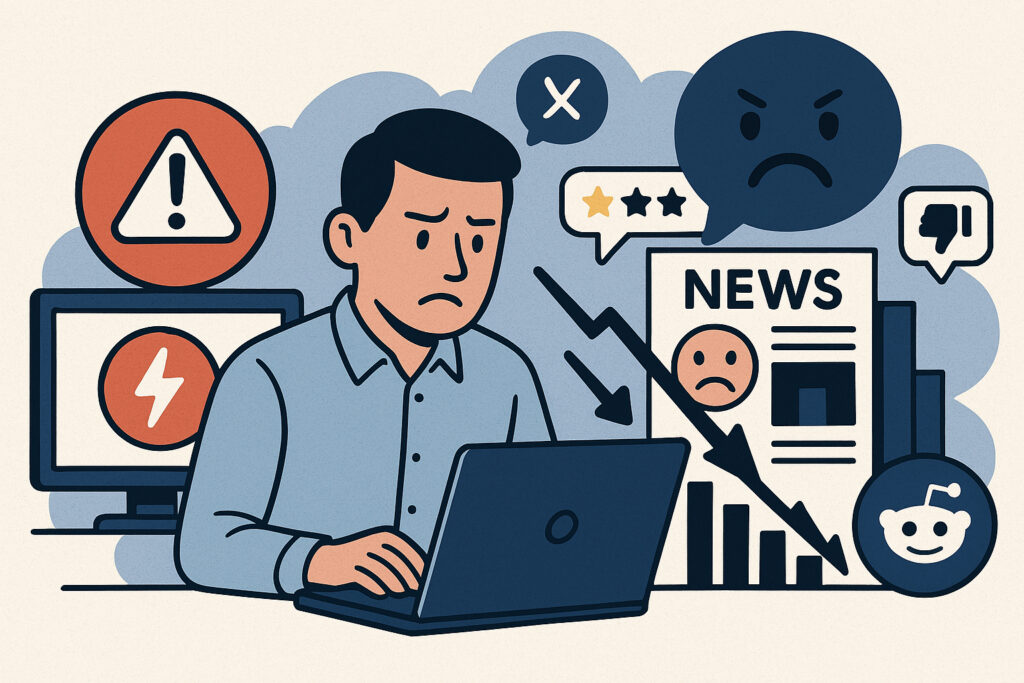
If you’ve ever woken up to find your company mentioned in a critical news article or social media post, you know that sinking feeling in your stomach. Negative media coverage isn’t just embarrassing—it directly impacts your bottom line, customer trust, and long-term business viability. Understanding how this happens and what you can do about it is essential for any business owner or marketing professional who wants to protect their brand’s reputation and revenue.
The Immediate Financial Impact of Bad Press
When negative media coverage hits, the financial consequences can be swift and severe. Studies consistently show that companies experiencing negative publicity see an immediate drop in stock prices, often within hours of the story breaking. For smaller businesses without publicly traded shares, the impact shows up differently but just as painfully: reduced sales, cancelled orders, and customers switching to competitors.
I remember working with a mid-sized e-commerce company that got caught up in a data privacy controversy. Within 48 hours of the story breaking on a major tech news site, their daily sales dropped by 37%. It took them three months of aggressive damage control and transparency initiatives to recover even half of that lost revenue. The scary part? They hadn’t actually done anything seriously wrong—the article had sensationalized a minor security update they were implementing.
How Customer Trust Evaporates
The real danger of negative media coverage isn’t just the immediate sales dip—it’s the erosion of trust that can take years to rebuild. When consumers read negative stories about your brand, especially from sources they consider credible, they begin questioning everything. Did I make a mistake choosing this company? Are my personal details safe? Should I warn my friends?
This psychological shift happens faster than most business owners realize. Research indicates that it takes roughly 12 positive experiences to make up for one negative impression. That’s a steep hill to climb when a critical article has already planted seeds of doubt in thousands or millions of minds.
Trust erosion manifests in several measurable ways. Customer acquisition costs typically increase because you need more touchpoints and reassurance to convert prospects. Customer lifetime value decreases as existing customers reduce their spending or defect to competitors. And referral rates plummet—people simply stop recommending brands they’ve heard negative things about, even if their personal experience has been fine.
The Ripple Effect Across Your Business
Negative media coverage doesn’t just affect your customer-facing operations. The damage ripples through your entire organization in ways that aren’t always immediately obvious.
Your recruitment efforts take a hit. Top talent researches companies before applying, and negative press makes you a less attractive employer. Current employees may feel demoralized or defensive, affecting productivity and morale. Some might even start updating their LinkedIn profiles and looking for opportunities elsewhere.
Partnership opportunities dry up. Other businesses become hesitant to associate with your brand, fearing guilt by association. Vendors might tighten payment terms. Investors become skittish. The entire ecosystem around your business responds to negative perception, even if the underlying story doesn’t directly concern them.
Search Engine Results That Haunt You
Here’s something many businesses don’t anticipate: negative media coverage tends to rank extremely well in search engines. News sites have high domain authority, and controversial stories generate lots of engagement signals that algorithms love. This means when potential customers search for your brand name, that negative article might sit right at the top of results for months or even years.
This creates a permanent roadblock in your customer journey. Every single prospect who does their due diligence before buying will encounter that negative story. You’re essentially fighting an uphill battle with every new customer interaction, having to overcome that negative first impression before you can even start your sales pitch.
Industry-Specific Vulnerabilities
Certain industries feel the pain of negative coverage more acutely than others. Healthcare providers, financial services, food and beverage companies, and childcare businesses operate in high-trust sectors where any whiff of scandal can be devastating. A restaurant facing food safety allegations can see immediate 50-70% drops in foot traffic. A financial advisor accused of mismanaging funds might lose clients overnight, regardless of whether the allegations prove true.
Tech companies face unique challenges around data privacy and security breaches. Even the appearance of vulnerability can send users fleeing to competitors. E-commerce businesses are particularly vulnerable to shipping, quality, or customer service complaints that go viral.
The Social Media Amplification Effect
Traditional media coverage is damaging enough, but social media amplifies negative stories exponentially. A single critical article can spawn thousands of shares, comments, and derivative posts, each adding their own spin and often making the situation sound worse than it actually is.
What makes social media particularly dangerous is the speed and unpredictability. A minor customer complaint can snowball into a full-blown crisis in hours if it hits the right nerve or catches the attention of influential accounts. And unlike traditional media, there’s no editorial process to slow things down or verify facts—people share first and ask questions later.
Why Quick Detection Matters
The window for effective damage control is shockingly small. Once a negative story has been live for several hours, shared widely, and indexed by search engines, your options for managing the situation become much more limited. This is why continuous monitoring is crucial—not just of major news outlets, but across review sites, social media platforms, forums, and niche industry publications.
Companies that detect negative coverage within the first hour have significantly better outcomes than those who find out days later. Early detection allows you to respond quickly, provide context, and potentially prevent the story from gaining viral momentum. You can reach out to journalists with corrections, respond to concerned customers on social platforms, and activate your crisis communication plan while the situation is still manageable.
Building a Protective Shield
The best approach to negative media coverage is proactive monitoring combined with a solid crisis response plan. You need systems that track mentions of your brand across dozens of sources and alert you immediately when something concerning appears. This isn’t about being paranoid—it’s about being prepared.
Regular monitoring also helps you identify potential issues before they become major stories. You might notice an uptick in customer complaints about a specific problem, giving you a chance to address it internally before a frustrated customer takes their story to the media or posts a viral rant.
Beyond monitoring, focus on building a strong foundation of positive content and customer relationships. When negative coverage does hit, having a bank of positive reviews, case studies, and loyal customer advocates makes weathering the storm much easier. Your reputation is like a reservoir—the more positive deposits you make during good times, the more you can draw from when challenges arise.
Negative media coverage is one of the most serious threats modern businesses face, but it’s also one of the most manageable if you have the right systems in place. Don’t wait for a crisis to wish you’d been paying closer attention.