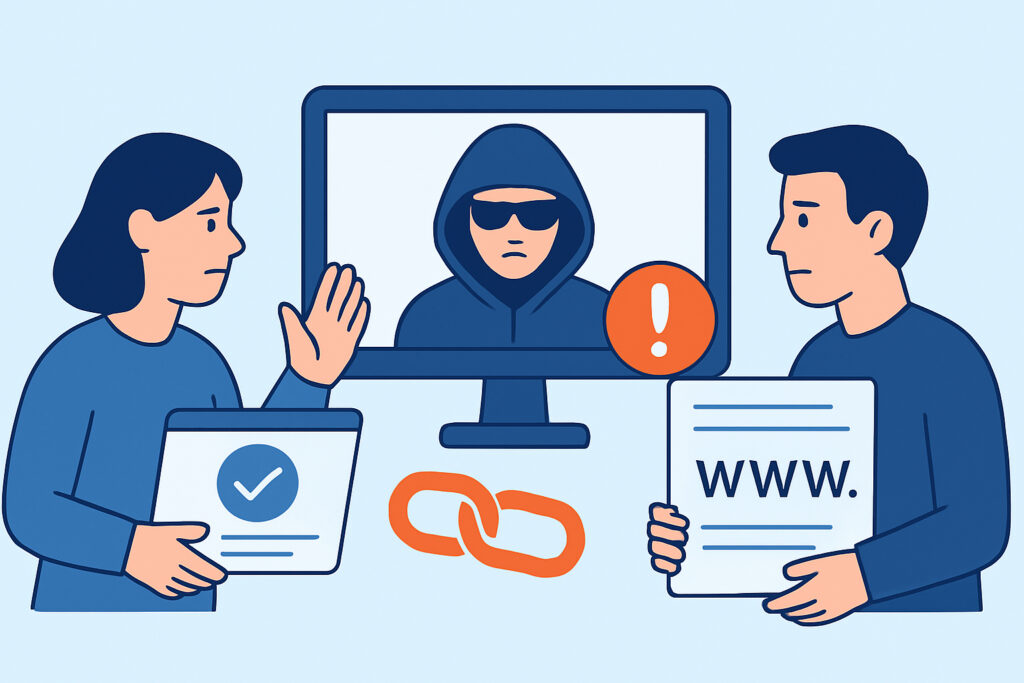
Brand impersonation and domain abuse represent critical threats that can devastate your business reputation and customer trust overnight. Learning how to prevent brand impersonation attacks requires understanding the multiple attack vectors criminals use and implementing comprehensive monitoring systems that catch threats before they escalate.
Domain abuse encompasses everything from typosquatting and fake websites to phishing campaigns using similar domain names. The financial impact extends beyond immediate fraud losses – damaged customer relationships and reduced brand credibility can take years to rebuild.
Common Types of Brand Impersonation Attacks
Domain-based impersonation remains the most prevalent threat. Attackers register domains that closely resemble your brand name using common techniques like character substitution, adding hyphens, or using different top-level domains. A technology company might face threats from domains like “techc0mpany.com” (replacing ‘o’ with ‘0’) or “tech-company.net.”
Social media impersonation involves creating fake profiles that mimic your brand’s appearance and messaging. These accounts often interact with your customers, spreading misinformation or attempting to gather personal data through fake customer service interactions.
Email-based attacks use spoofed sender addresses or domains similar to yours for phishing campaigns. Customers receive emails that appear to come from your company, requesting sensitive information or directing them to malicious websites.
Website cloning creates nearly identical copies of your legitimate website, often hosted on similar domains. These fake sites capture customer login credentials, payment information, or personal data while appearing completely legitimate.
How to Prevent Brand Impersonation Through Domain Protection
Start with defensive domain registration. Register common variations of your primary domain, including different top-level domains (.net, .org, .info), common misspellings, and hyphenated versions. This proactive approach eliminates the most obvious attack vectors.
Implement domain monitoring systems that scan for newly registered domains containing your brand name or similar variations. Typosquatting detection should run continuously, as attackers often register malicious domains in waves during high-traffic periods or product launches.
Configure email authentication protocols including SPF, DKIM, and DMARC records. These technical safeguards prevent attackers from successfully spoofing your domain in email campaigns, protecting both your customers and your sender reputation.
Set up trademark monitoring with relevant authorities and commercial services. When someone attempts to register a domain or trademark that infringes on your intellectual property, early detection enables faster legal response.
Setting Up Comprehensive Brand Monitoring
Effective brand protection requires monitoring multiple channels simultaneously. Social media platforms, review sites, domain registrars, and search engines all represent potential attack surfaces where impersonation can occur.
Deploy automated scanning tools that check for unauthorized use of your brand name, logo, or other identifying elements across the web. Manual monitoring cannot match the speed and coverage needed to catch sophisticated impersonation attempts.
Monitor SSL certificate transparency logs. When attackers create professional-looking fake websites, they often obtain SSL certificates for credibility. Certificate transparency logs provide an early warning system for domains using your brand name.
Track brand mentions and sentiment across digital channels. Impersonation attacks often generate negative customer experiences that surface as complaints or confused social media posts before the attack is formally discovered.
Immediate Response Strategies When Impersonation Is Detected
Time sensitivity cannot be overstated when responding to brand impersonation. Every hour of delay allows attackers to reach more victims and cause additional damage to your reputation.
Document everything immediately. Take screenshots of fake websites, social media profiles, or malicious content before attackers can modify or remove evidence. This documentation supports takedown requests and potential legal action.
Contact the hosting provider or platform directly through abuse channels. Most legitimate services have established procedures for handling impersonation reports and can act faster than formal legal processes.
Issue customer communications through your verified channels. Alert your audience about the impersonation attempt, provide guidance on identifying legitimate communications from your brand, and offer direct contact information for customer concerns.
Building Long-term Brand Protection Infrastructure
Sustainable brand protection requires systematic approaches rather than reactive measures. Companies that successfully prevent impersonation build security considerations into their broader digital reputation management strategy.
Establish regular security audits that examine your domain portfolio, email authentication, and brand monitoring coverage. Security gaps often develop as businesses expand into new markets or launch new products without updating protection measures.
Train customer service teams to recognize and report potential impersonation incidents. Frontline staff often receive the first complaints about suspicious communications or websites claiming to represent your brand.
Create incident response procedures that define roles, responsibilities, and escalation paths when impersonation is detected. Clear procedures enable faster response times and reduce the chance of critical steps being overlooked during high-stress situations.
Common Misconceptions About Brand Impersonation Prevention
Many business leaders believe that trademark registration alone provides sufficient protection against impersonation. While trademarks offer important legal recourse, they do not prevent initial attacks or provide real-time detection of abuse.
Another widespread misconception suggests that small businesses face minimal impersonation risks. Attackers often target smaller companies precisely because they typically have weaker monitoring and response capabilities, making attacks more likely to succeed.
Some organizations assume that technical solutions like domain blocking can eliminate impersonation threats entirely. However, attackers continuously evolve their techniques, requiring ongoing adaptation of defensive measures rather than set-and-forget solutions.
Integration With Overall Digital Security
Brand impersonation prevention should integrate with broader cybersecurity and reputation monitoring efforts. Isolated security measures often miss sophisticated attacks that combine multiple vectors or evolve over time.
Phishing detection systems provide valuable overlap with brand protection monitoring. Many impersonation campaigns include phishing elements, and coordinated monitoring improves detection accuracy.
Consider how brand protection efforts connect with technical domain security measures. Strong technical foundations make it harder for attackers to create convincing impersonation attempts and provide additional data sources for monitoring systems.
Frequently Asked Questions
How quickly should businesses respond to detected brand impersonation?
Response should begin within hours of detection, not days. Document evidence immediately, initiate takedown procedures with hosting providers or platforms, and communicate with customers through verified channels. Delayed responses allow more customers to be victimized and increase reputational damage.
What legal options exist for persistent brand impersonation attacks?
Legal remedies include UDRP proceedings for domain disputes, DMCA takedown notices for copied content, and traditional trademark infringement lawsuits. However, legal processes often take weeks or months, making prevention and rapid response more effective than relying solely on legal remedies.
Can small businesses afford comprehensive brand impersonation monitoring?
Modern monitoring tools offer scalable options suitable for businesses of all sizes. Basic protection including domain monitoring, social media scanning, and email authentication can be implemented cost-effectively. The expense of comprehensive monitoring typically represents a fraction of the potential losses from successful impersonation attacks.
Successful brand impersonation prevention requires balancing proactive defensive measures with rapid response capabilities. Companies that invest in comprehensive monitoring and systematic response procedures protect not only their immediate business interests but also build stronger long-term customer trust and brand resilience.