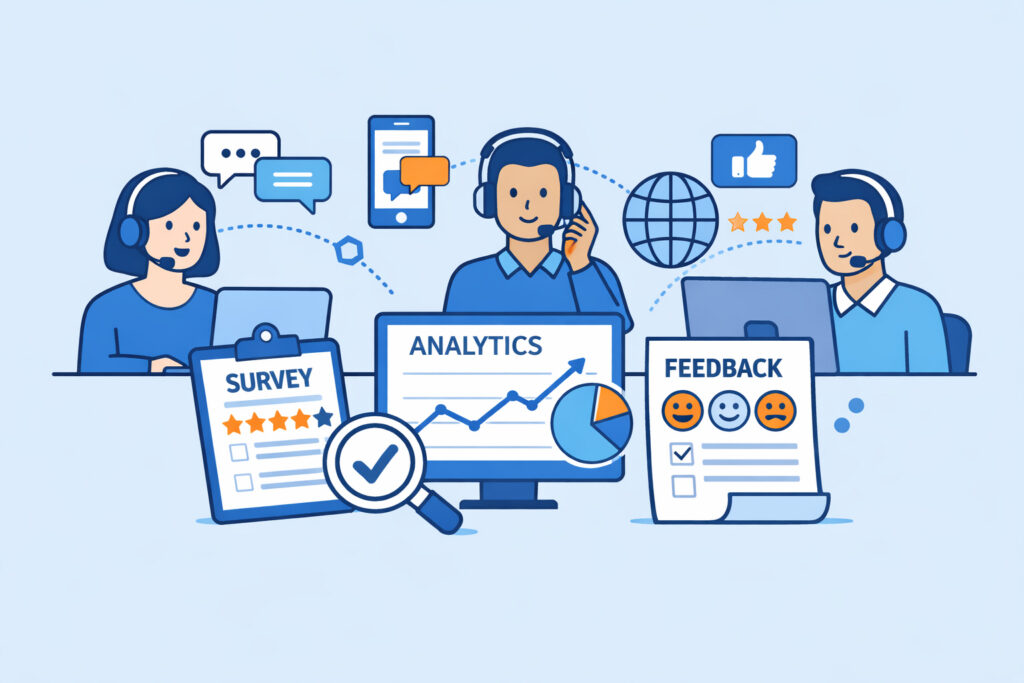
Customer service quality monitoring across digital platforms is no longer optional – it’s the difference between brands that grow and brands that slowly bleed customers without understanding why. If you’re a business owner or brand manager trying to keep track of how your team handles support interactions on social media, review sites, and messaging channels, this guide breaks down exactly how to do it effectively and what to watch for.
The reality is that most businesses think they’re delivering great service until they actually start measuring it across every platform where customers reach out.
Why Monitoring Customer Service Quality Matters More Than Ever
A frustrated customer doesn’t care which platform they’re on. They’ll leave a one-star Google review, post a rant on Reddit, tag your brand on Twitter, and file a complaint on Trustpilot – all within the same hour. If you’re only monitoring one or two of those channels, you’re seeing a fraction of the picture.
Here’s what makes this tricky: the quality of your customer service responses varies wildly depending on the platform. Your team might be polished and professional on email but slow and dismissive on Facebook comments. That inconsistency erodes trust faster than a single bad interaction ever could.
Imagine a mid-sized SaaS company that prides itself on quick email support. Response times average under two hours. But on their Google Business profile, review replies are generic copy-paste templates posted days after the original complaint. A potential customer researching the brand sees those stale, robotic replies and moves on. The company never even knows they lost the deal.
The Common Myth: “We Don’t Get Enough Complaints to Worry About This”
This is one of the most dangerous assumptions in reputation management. For every customer who complains publicly, there are dozens who simply leave without saying a word. The complaints you do see are the tip of the iceberg.
Worse, many businesses confuse low complaint volume with high satisfaction. They’re not the same thing. Low complaint volume often means customers don’t believe complaining will help – which is actually a worse signal than a high volume of complaints that get resolved quickly.
Monitoring customer service quality isn’t about counting complaints. It’s about understanding response patterns, tone consistency, resolution speed, and whether your team’s public interactions actually build trust or quietly destroy it.
What to Monitor and Where
Effective customer service quality monitoring covers three dimensions across every platform where your brand has a presence.
Response time. How quickly does your team acknowledge and respond? Track this separately for each platform. A 24-hour response on Twitter feels like being ignored. The same window on email might be perfectly acceptable.
Response quality and tone. Are replies helpful, empathetic, and specific to the customer’s issue? Or are they generic templates that make the customer repeat themselves? Look for patterns – if multiple customers on the same platform describe feeling unheard, that’s a systemic issue, not a one-off.
Resolution rate. Did the interaction actually solve the problem? A fast, polite response that doesn’t fix anything still counts as a failure in the customer’s eyes.
The platforms you need to cover include Google Reviews, Trustpilot, Facebook, Reddit, Yelp, G2, and Capterra – essentially anywhere customers can leave public feedback. Don’t forget social media mentions that aren’t direct reviews but still reflect service quality, like a frustrated tweet or a Reddit thread discussing your support experience. Tools like daily review monitoring across Trustpilot, Google, and Facebook help you catch these interactions before they snowball.
Step-by-Step: Building a Monitoring Framework
Step 1: Map every customer touchpoint. List every platform where customers can interact with or talk about your brand. Include review sites, social media, forums, and community boards. Most businesses undercount by at least two or three channels.
Step 2: Define your quality benchmarks. Set specific targets for each dimension. For example: first response within four hours on social media, within one business day on review platforms. Every reply must reference the specific issue raised. Resolution confirmation within 48 hours.
Step 3: Automate detection. Manual checking doesn’t scale. You need automated monitoring that flags new reviews, mentions, and complaints as they appear – ideally on an hourly cycle. This is where a service like RepVigil adds real value, running continuous checks across review platforms and measuring brand sentiment across digital channels so you’re not relying on someone remembering to check each site.
Step 4: Track patterns, not just incidents. Individual complaints are data points. Patterns are insights. If response quality drops every Friday afternoon, that’s a staffing issue. If one platform consistently gets slower replies, that’s a process gap. Review your data weekly and look for trends.
Step 5: Close the loop publicly. When you resolve an issue raised in a public review or social post, follow up visibly. A short reply confirming the resolution shows future customers that you take service seriously. This is one of the most underused reputation-building tactics available.
How RepVigil Fits Into Your Monitoring Stack
RepVigil runs 40 automated tests covering online reputation, brand and marketing performance, and technical security. For customer service quality specifically, it monitors reviews across major platforms including Trustpilot, Google, Facebook, Reddit, Yelp, G2, and Capterra. It tracks brand sentiment, detects fake reviews that could distort your service quality picture, and sends immediate email alerts when critical issues surface.
The three-tier scoring system separates technical security from marketing performance and reputation status, which means you can isolate customer service trends without noise from unrelated metrics. Hourly monitoring ensures you’re not discovering a service failure three days after it went public.
FAQ
How often should I review customer service quality data across platforms?
At minimum, do a weekly review of response times, tone, and resolution rates across all active platforms. Set up real-time alerts for negative reviews or mentions so your team can respond within hours rather than days. Monthly, look at broader trends – are scores improving, declining, or flat?
What’s the biggest mistake businesses make with cross-platform service monitoring?
Treating all platforms the same. Each channel has different customer expectations for speed, tone, and depth of response. A detailed, formal reply works on email but feels stiff on Twitter. A quick emoji-laden response suits social media but looks unprofessional on a Trustpilot reply. Tailor your approach to each platform’s culture.
Can automated monitoring replace manual quality checks?
Automated monitoring handles detection and alerting brilliantly – it catches things humans miss and operates around the clock. But evaluating whether a specific reply was empathetic, accurate, and helpful still requires human judgment. The best approach combines automated detection with periodic manual review of a sample of interactions.
The bottom line is straightforward: you can’t improve what you don’t measure. Start by mapping your platforms, set clear benchmarks, automate the detection layer, and review patterns regularly. Customer service quality monitoring across digital platforms isn’t a one-time project – it’s an ongoing discipline that directly impacts your brand reputation, customer retention, and revenue.