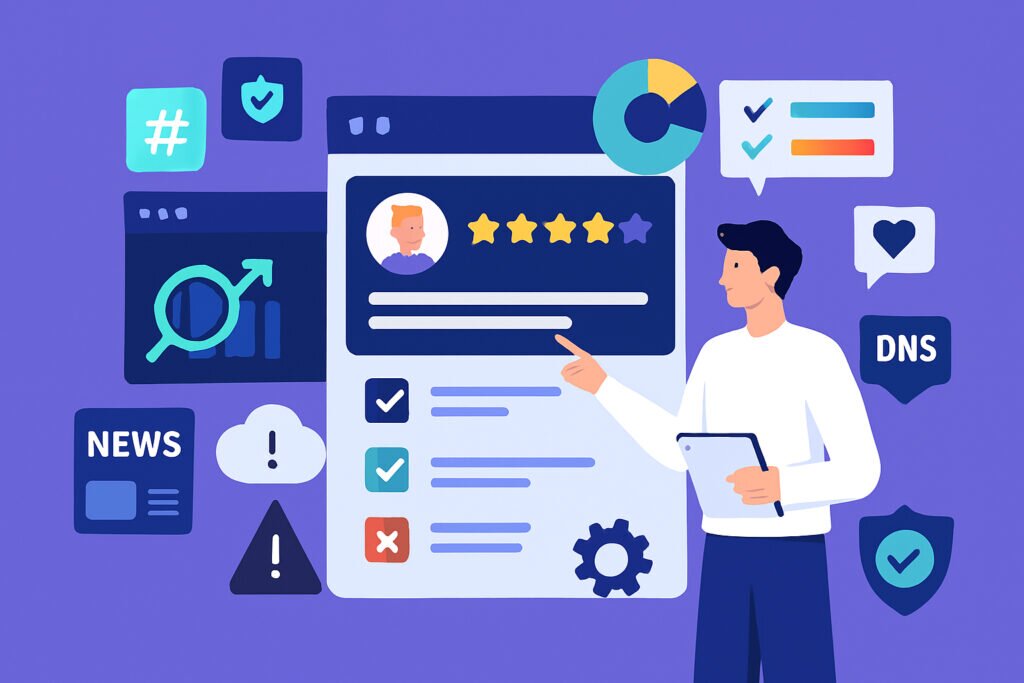
Brand reputation monitoring is the process of systematically tracking everything people say about your business online—and acting on it before problems escalate. If you run a business that depends on customer trust (and let’s be honest, which business doesn’t), understanding what brand reputation monitoring actually involves is the difference between staying ahead of threats and scrambling to recover from them.
Your brand is being discussed right now. On review platforms, in Reddit threads, across social media. The real question isn’t whether those conversations are happening—it’s whether you know about them in time to do something useful.
Why Manual Reputation Tracking Fails Every Time
I’ve seen this play out too many times. A business owner checks Google reviews once a week, maybe scans Facebook on Monday mornings, and calls that “monitoring.” Then a technical glitch hits on a Friday afternoon. Customers start complaining on TrustPilot. Someone posts a detailed thread on Reddit. By Monday, there are dozens of negative mentions across platforms—and the first page of Google for the brand name tells a story the owner didn’t even know was being written.
The internet doesn’t wait for your weekly review check. A single negative experience can generate dozens of mentions within hours. Manual tracking worked in 2010. It’s a liability in 2025.
This is exactly why early crisis detection matters so much. The window between “manageable complaint” and “full-blown PR problem” keeps getting shorter every year.
The Three Pillars of Brand Reputation Monitoring
Most people think reputation monitoring means watching reviews. That’s roughly one-third of the picture. Comprehensive monitoring operates across three distinct areas that reinforce each other.
Online Reputation is the human layer. This covers customer reviews on platforms like TrustPilot, Google, Facebook, Yelp, G2, and Capterra. But it goes well beyond star ratings. It includes detecting fake reviews planted by competitors or disgruntled individuals, tracking negative media coverage, monitoring your employer brand on sites like Glassdoor, and even watching Wikipedia for edits to your company page. If someone is shaping the narrative about your business, this pillar catches it.
The fake review problem alone deserves attention. A few strategically placed one-star reviews with detailed complaints can tank your conversion rate, and most business owners have no idea it’s happening until revenue drops. Knowing how to detect fake reviews is a skill every brand manager needs.
Brand and Marketing Performance tracks your visibility and how people feel about you. What’s the overall sentiment when your brand comes up in conversation? Are social media mentions trending positive or negative? Is a controversy brewing that hasn’t hit mainstream coverage yet? This area also covers competitor positioning, content quality, and customer service perception. Measuring brand sentiment across digital channels gives you the context that raw review scores miss.
Technical Security is the pillar most businesses overlook completely—and it can be the most damaging. If your domain lands on a DNS blacklist, your emails go straight to spam folders. If someone registers a lookalike domain for phishing, your customers get scammed and blame you. If Google Safe Browsing flags your site, your organic traffic vanishes overnight. Technical monitoring covers email deliverability, SPF/DKIM/DMARC authentication, domain history, SEO spam injection, and typosquatting detection.
These three pillars aren’t independent. A technical security failure causes reputation damage. A reputation crisis hurts marketing performance. They’re interconnected, and monitoring only one leaves dangerous blind spots.
What Poor Monitoring Actually Costs You
The hidden costs of poor online reputation go far beyond lost sales—though those are painful enough. Here’s what I’ve seen happen when businesses fly blind.
A mid-size SaaS company ignored review monitoring for six months. During that time, a competitor systematically posted negative reviews across three platforms using different accounts. By the time the company noticed, their average rating had dropped from 4.6 to 3.8 stars. The recovery took over a year and required investing in a dedicated response strategy.
Another common scenario: a phishing campaign using a domain one character different from yours. Customers receive emails that look legitimate, enter their credentials, and get compromised. Many of them blame your company—not the scammer. Without typosquatting monitoring, you don’t even know it’s happening until support tickets start flooding in.
The financial impact compounds. Lost customers tell others. Negative content ranks in search results. Recruiting becomes harder when employer review sites show problems. Each undetected issue creates secondary damage that multiplies over time.
Busting the “Big Company Only” Myth
Here’s a misconception that needs to die: reputation monitoring is only for large enterprises with dedicated PR teams. The reality is exactly the opposite. Small and mid-size businesses are far more vulnerable to reputation damage because they lack the brand equity buffer that large companies have.
A Fortune 500 company can survive a reputation hit. Their brand recognition, marketing budget, and customer base provide resilience. A local business with 50 Google reviews? One coordinated negative campaign can devastate them. The businesses that need monitoring most are often the ones least likely to have it.
The other myth is that effective monitoring requires expensive tools and full-time staff. Modern automated systems handle the heavy lifting—scanning platforms, analyzing sentiment, checking technical indicators—and alert you only when human action is needed. You don’t need a reputation manager on payroll. You need a system that watches while you focus on running your business.
How Automated Monitoring Changes the Game
Effective brand reputation monitoring today runs continuously. The best systems scan dozens of indicators every hour across all three pillars—online reputation, brand performance, and technical security.
The real value is in the alert system. Instead of discovering problems during your weekly review, you get notified the moment something critical is detected. A sudden spike in negative reviews. Your domain appearing on a blacklist. A new lookalike domain registered for potential phishing. These alerts give you the response window that manual monitoring simply cannot provide.
A unified scoring system helps you prioritize. When you can see technical security, marketing performance, and reputation status in one view—each scored and color-coded by severity—you spend your time where it matters most instead of guessing which fire to fight first.
For a complete framework on building your monitoring strategy, the complete guide to online reputation management covers everything from initial setup to ongoing maintenance.
FAQ
How often should brand reputation monitoring run?
Continuous monitoring with hourly scans is the current standard for businesses that take reputation seriously. Weekly or monthly checks leave too many gaps. Critical issues like blacklist additions or phishing campaigns need to be caught within hours, not days.
Can small businesses benefit from reputation monitoring?
Absolutely—small businesses arguably benefit the most. They have less margin for error and fewer resources to recover from reputation damage. Automated monitoring levels the playing field by providing enterprise-grade detection without requiring enterprise budgets or dedicated staff.
What’s the first thing to do when monitoring detects a problem?
Assess severity first. Technical issues like blacklist entries or security flags need immediate technical fixes. Review-related problems need a calm, professional public response within 24 hours. The worst thing you can do is ignore the alert—every hour of inaction gives the problem more time to spread.
Your brand reputation isn’t something you build once and forget. It’s a living, shifting perception shaped by every customer interaction, every review, every technical indicator, and every mention across the internet. The businesses that thrive long-term are the ones that treat reputation monitoring as essential infrastructure—not as an afterthought when something goes wrong.